If you’ve ever walked through a industrial parts trade show or chatted with a fellow spring design engineer, you’ve probably heard “music wire” thrown around like it’s the only material worth using for precision metal springs. As a metal spring supplier who’s talked to hundreds of designers over the last 12 years, I get it—this stuff feels like a magic bullet, especially when you’re troubleshooting a spring that keeps failing too early. But here’s the thing: music wire isn’t one-size-fits-all, and mixing it up with other common spring materials is a quick way to wind up with springs that crack under load, corrode in the wrong environment, or cost way more than they need to. Today, I want to break down the real differences between music wire and the other materials we work with every day, so you can make the right call for your next project—and know when to reach for that music wire, and when to skip it. Metal Spring
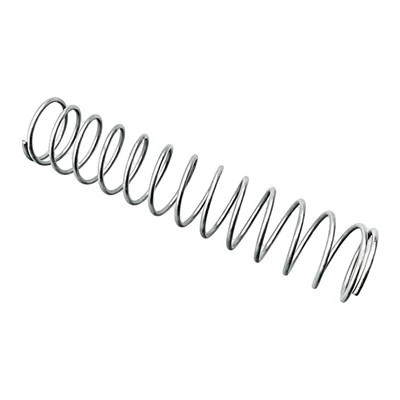
First, let’s get clear on what music wire actually is. A lot of people think it’s “named because it’s used for piano strings,” which is partially true, but the full story is more specific. Music wire is a type of high-carbon steel, typically made from 0.80% to 0.95% carbon content, with very few impurities. The manufacturing process for it is key: it’s cold-drawn to a precision diameter, then patented—meaning it’s heated to above its critical temperature, quenched, and tempered to get that signature combination of hardness and tensile strength. By the time it’s ready for spring production, it has a tensile strength that’s double or even triple that of low-carbon steel, which is where it pulls ahead of many other common spring materials.
Let’s start with the most frequent mistake I see designers make: comparing music wire to low-carbon steel, like 1018. Low-carbon steel is soft, cheap, and easy to weld or machine, but it’s terrible for springs. I once had a customer come to me last year with a set of small compression springs for a medical device that were breaking after just 10,000 cycles. He’d ordered low-carbon wire because it was half the price of music wire, but he didn’t realize that low-carbon steel’s maximum tensile strength is around 60,000 PSI, while music wire starts at 220,000 PSI for small gauges and can hit 300,000 PSI for thinner diameters. That difference in strength might sound like a numbers game, but for a spring, it translates to how much load it can hold and how many times it can compress or extend without failing. Low-carbon steel springs will stretch permanently under even moderate load, while music wire can handle 100,000 to 1,000,000 cycles without deforming—perfect for things like automotive valves, door hinges, or even the springs in your keyboard keys. The catch? Low-carbon steel bends way easier, so it’s only good for low-stress applications, not the high-precision, high-cycle jobs that most of our clients come to us for.
Next up: hard-drawn wire. A lot of people mix music wire and hard-drawn wire, and honestly, we’ve had to correct that mix-up hundreds of times. Hard-drawn wire is also cold-drawn high-carbon steel, but it skips the patented heat treatment step that gives music wire its unique properties. Instead, it’s just drawn through a die at room temperature, which makes it hard but brittle. Its tensile strength is lower—around 150,000 to 200,000 PSI, depending on gauge—and it has a higher risk of cracking or snapping when bent into complex spring shapes, especially small ones. Last quarter, a customer tried to use hard-drawn wire for a torsion spring for a farm equipment latch. The spring kept breaking right at the bend point after a few hundred uses, because hard-drawn wire’s brittleness meant it couldn’t handle the repeated torsion without developing microcracks. Music wire, on the other hand, has a more uniform grain structure from that patented process, so it bends cleanly without cracks, even for tight, complex bends. That uniformity also means music wire has more consistent spring rates—something critical for applications like aerospace or medical devices where even a 5% variation in spring rate can throw off the whole system’s performance. Hard-drawn wire has a lot more variability, which makes it risky for high-precision work.
Now, let’s talk about stainless steel, because that’s another big one. A lot of people assume stainless steel is just a “better” spring material than steel, but it’s not—its strengths are totally different, and that’s where we see the most trade-offs. Music wire is great for strength and cost, but it’s prone to corrosion, especially in damp or acidic environments. If you’re making springs for a marine application, a food processing machine, or a outdoor power tool, music wire will rust fast, and even a little surface rust can weaken the wire over time and cause it to break. That’s when stainless steel comes in, specifically 302 stainless, which is the most common spring-grade stainless. But here’s the catch: 302 stainless has a tensile strength of around 175,000 to 275,000 PSI, so it’s weaker than music wire at its best. It’s also more expensive—usually 30 to 50% more than music wire—because of the chromium content that makes it corrosion-resistant. For a project where corrosion isn’t a factor, going with stainless instead of music wire is throwing money away, and you’ll get a less durable spring to boot. We had a customer last spring who was building a consumer electronics product that used springs inside the device, never exposed to moisture. He initially quoted 302 stainless, but after we walked through the numbers and his application, he switched to music wire and saved $12,000 on his first run—with no issues in performance. The only time stainless makes sense is when corrosion is non-negotiable, or when you need the ability to pass through food safety certifications (302 stainless is often food-grade, while most music wire isn’t).
Wait, there’s also spring steel, like 5160 alloy steel, which is often used for heavy-duty springs. Is that the same as music wire? No, not at all. 5160 is a medium-carbon alloy with chromium, and it’s heat-treated after forming, which makes it super tough for heavy loads—like the leaf springs in trucks or suspension components. But it’s not cold-drawn to the precision that music wire is, so it’s too thick and variable for small, precision springs. If you tried to wind a small compression spring out of 5160, it wouldn’t have the consistent diameter or strength that you get with music wire, and it would be way harder to machine or wind without causing warping. Music wire is for small to medium springs where precision is key, while 5160 is for large, heavy-duty applications where size and precision aren’t the top priorities.
So let’s summarize the key differences, because I know this can get overwhelming. First, tensile strength: music wire wins here, hands down. It has the highest tensile strength of all the common spring materials we work with, which means it can handle more load and more cycles without failing. That’s why it’s the go-to for applications like automotive engine valves, clutch springs, and electrical connectors—all places where reliability under constant stress is non-negotiable. Second, uniformity and consistency: music wire’s cold-drawn and patented process gives it a very uniform diameter and grain structure, so every spring you make from it will have the same spring rate and performance. Other materials, like hard-drawn wire or 5160, have more variability, which is a big risk for applications where even a small variation can cause a problem. Third, cost: music wire is one of the most affordable high-performance spring materials, especially compared to stainless steel or specialty alloys. That’s not to say it’s cheap, but for the performance you get, it’s a better value than many alternatives for most indoor, low-corrosion applications.
But here’s the thing: music wire isn’t always the right choice. I tell our customers all the time, the best material depends on three factors: your application’s environment, the required number of cycles, and your budget. If you’re building springs for a boat that’s exposed to saltwater, music wire will rust in months. If you need springs that pass food safety tests for a yogurt machine, music wire isn’t food-grade, so you’ll need stainless. If you just need a few small springs for a toy that will be played with for a few months, low-carbon steel is probably fine. But for most industrial, automotive, and consumer electronics applications where you need springs that last for years, handle thousands of cycles, and cost a reasonable amount, music wire is hard to beat.
Over the years, I’ve seen designers make every mistake in the book with spring materials: ordering hard-drawn wire for a precision aerospace part, using stainless steel for a low-load toy spring just because they thought it was better, even once trying to use aluminum for a spring (don’t do that—aluminum is way too soft and stretches permanently). The biggest takeaway I can share, as someone who’s been in the metal spring business for more than a decade, is that music wire is a workhorse, not a one-size-fits-all solution. It’s perfect for a huge range of applications, but knowing when to pick it, and when to reach for another material, is what separates a good spring design from one that ends up costing you time and money in replacements.
If you’re working on a spring project and aren’t sure which material is right—whether it’s music wire, stainless, or something else—we’re here to help. We’ve got 15 years of experience customizing springs for every industry, from medical devices to construction equipment, and we can walk you through the pros and cons for your specific needs. Whether you need a prototype quote, a production run, or just a quick question answered, feel free to reach out to connect with our team to discuss your spring requirements.
Spring Steel Wire References
1.ASM International. (2020). Spring Materials: Selection and Application. ASM Handbook, Volume 9: Metallography and Microstructures.
2.National Spring Association. (2019). Guide to Spring Materials and Properties. North American Spring Manufacturers Association.
3.Cawley, J. (2018). The Science of Spring Wire: Cold Drawing and Heat Treatment. Journal of Industrial Manufacturing, Vol. 45, No. 2, pp. 78-85.
4.SAE International. (2021). Standard Practice for Selection of Spring Materials (SAE J1128). Society of Automotive Engineers.
Baoding Zhongxin Spring Manufacturing Co., Ltd.
We’re known as one of the most reliable metal spring manufacturers and suppliers in China. With abundant experience, we warmly welcome you to buy durable metal spring made in China here and get pricelist from our factory. All customized springs are with high quality and competitive price.
Address: West Side, 200 Meters North of Chenzhuang Gas Station, Pangkou Town, Gaoyang County, Baoding City, Hebei Province, P.R. China
E-mail: 13292951555@163.com
WebSite: https://www.zhongxinind.com/
