Hey everyone, let’s cut to the chase – if you’ve ever shopped for stainless steel grating, you’ve probably wondered about that thermal expansion coefficient thing. I get it, I’m the go-to guy for stainless steel grating at our shop, and this question comes up so much I could probably answer it in my sleep. Stainless Steel Grating
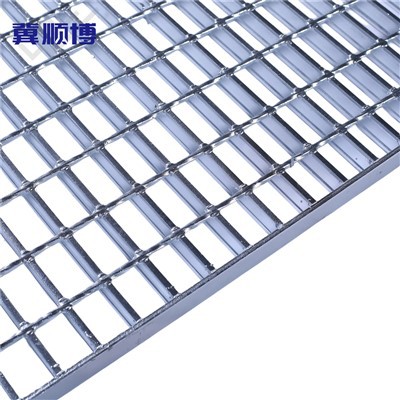
First off, let’s make this simple – no stuffy engineering jargon that makes your eyes glaze over. What’s the thermal expansion coefficient of stainless steel? Basically, it’s how much the metal stretches or shrinks when the temperature changes. You know how your favorite coffee mug cracks if you pour boiling water in it right after washing it with cold water? Same idea, just with metal. The number here tells us how much that stretch happens per degree of heat or cold.
Now, not all stainless steel is the same, so let’s get specific about our grating. We mainly use two grades for our stainless steel grating – 304 and 316, those are the workhorses. If you’re not in the industry, think of 304 as the all-arounder and 316 as the heavy-duty, saltwater-resistant cousin. Their thermal expansion numbers are a bit different, which matters a ton for where you’re putting this grating.
For 304 stainless steel, the thermal expansion coefficient is roughly 17.2 x 10^-6 per degree Celsius (that’s the same as 9.6 x 10^-6 per degree Fahrenheit, if you’re using imperial). Wait, let me put that in real terms so it makes sense. If you have a 10-meter (around 33-foot) piece of 304 grating, and it heats up from, say, a chilly 10°C (50°F) to a sweltering 50°C (122°F) – that’s a 40-degree jump – it’ll expand by about 6.88 millimeters. That’s barely the thickness of a dime, right? But if you’re dealing with huge runs, like for a factory floor or a bridge deck, that tiny add-up is huge. Can’t just install pieces super tight together or they’ll buckle when it heats up.
Now 316 stainless steel – that’s our marine-grade stuff, used for docks, food processing plants where they use harsh cleaners, any spot that needs extra corrosion resistance. Its thermal expansion coefficient is a tiny bit lower, around 16.0 x 10^-6 per °C (or 8.9 x 10^-6 per °F). Wait, why is that? The alloy adds molybdenum, which tweaks the metal’s molecular structure a touch, so it expands less with heat. Same 10-meter piece, same 40-degree temp jump – only about 6.4 millimeters. Still tiny in the moment, but over hundreds of feet, that difference adds up.
A lot of people mix this up with other metals, like aluminum. Aluminum’s expansion is way higher – around 23 x 10^-6 per °C – so if you’re switching from aluminum to stainless steel, you can’t reuse the same gap allowance. That’s a mistake we see all the time when people shop around and don’t check the grade. We always flag that for our clients, no matter if they end up buying from us or not – good info’s worth more than a quick sale.
Now, why does this even matter for stainless steel grating specifically? Let’s talk use cases. If you’re putting grating on a loading dock that’s outside, where it goes from -30°F in the winter to 100°F in the summer, that’s a 130-degree swing. For a 50-foot run of 304, that’s almost a quarter inch of expansion. If you cut that run into pieces that are too long and don’t leave enough space between them, when it heats up, those pieces will push against each other, warp, maybe even crack welds. We design all our grating with that in mind, and we give installation guides that spell out exactly how much gap to leave based on the length of the run and the grade.
Another big one is industrial settings – like factories where there’s hot machinery nearby. Let’s say you have grating right next to a furnace that runs at 200°F higher than ambient. Even with the lower expansion of 316, you can’t mount it rigidly at both ends. We use floating supports for that kind of setup, so one end can slide, absorbing the expansion without putting stress on the metal or the connections. We’ve had clients skip this step, and within a year their grating was all twisted up, and they had to replace it. That’s a headache we work hard to help people avoid.
Wait, what about other stainless steel grades? We occasionally use 304L or 316L, the low-carbon versions, but their thermal expansion is almost identical to their standard counterparts – like within 1-2% difference, so it’s not something you have to stress over. We only mention those if you need extra weldability for thin grating, but the expansion number stays basically the same.
You might be thinking, “What about stainless steel vs. carbon steel?” Carbon steel’s expansion is around 12 x 10^-6 per °C, so lower than both 304 and 316. But carbon steel rusts, so most people go stainless anyway, even if they have to account for a little more expansion. It’s a trade-off that’s worth it for durability, especially in wet or corrosive areas.
Let’s also clear up a common myth: some people think the thermal expansion coefficient changes with temperature. For stainless steel, up to around 500°C (932°F), it’s pretty linear – so the number stays consistent. Above that, it starts to go up a bit, but that’s way hotter than any grating would ever be in normal use. We work with a lot of power plants and refineries, and even their hot zones don’t hit temps where the expansion number shifts enough to matter for standard grating.
Now, as a stainless steel grating supplier, this stuff is second nature to me, but I know most of our clients aren’t metallurgists. They’re contractors, building owners, factory managers who just need grating that works, doesn’t buckle, lasts. So when someone emails asking about thermal expansion, I don’t just send a textbook number – I break it down to their specific project. If they’re doing a 20-foot indoor catwalk, I tell them 304 is fine, leave a 1/8-inch gap between panels. If they’re doing a 100-foot outdoor dock in Florida, I hit them with 316, floating supports, and a 3/8-inch gap. No guesswork, just real-world numbers that work.
I’ve been doing this for 12 years, and I’ve seen way too many projects go wrong because someone overlooked the expansion coefficient. One client came to us a couple years back, had installed cheap aluminum grating on their warehouse floor, replaced it twice in two years because it warped. Switched to our 304 grating, followed our expansion guidelines, and it’s still going strong five years later. That’s the stuff that matters – not just selling grating, but making sure it fits their needs.
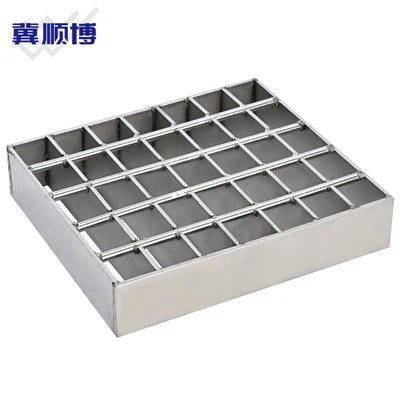
If you’re in the market for stainless steel grating, don’t waste time guessing about thermal expansion. Hit us up with your project details – where you’re installing it, how big the runs are, what temps it’ll see – and we’ll hook you up with the right grade, the right gap specs, no confusion. We don’t push the most expensive stuff, we push what works for you.
Fiberglass Grating References:
- ASM International. (2004). Metals Handbook: Properties and Selection: Irons, Steels, and High-Performance Alloys (10th ed.).
- Stainless Steel World. (2019). Thermal Expansion Characteristics of Common Stainless Steel Grades.
- Fabricators & Manufacturers Association, International. (2021). Installation Guidelines for Metal Grating in Temperature-Varying Environments.
Hebei Shunbo Metal Wire Mesh Manufacturing Co., Ltd.
As one of the most professional stainless steel grating manufacturers and suppliers in China, we’re featured by quality products and good price. Please rest assured to buy high-grade stainless steel grating for sale here from our factory. Contact us for more details.
Address: No.66, Xicheng Avenue, West Zone, Economic Development Zone, Raoyang County, Hengshui City, Hebei Province, China
E-mail: info@steelgratingworld.com
WebSite: https://www.shunbosteelgrating.com/
