If you’ve ever worked with niobium metal—whether you’re in aerospace, medical devices, or even high-performance electronics—you probably know it’s a total workhorse on its own. But here’s a little secret most folks don’t talk about right away: surface treatment is the game-changer that turns good niobium into the stuff that stands up to extreme temperatures, resists corrosion, or plays nice with sensitive biological tissue. As a niobium metal supplier, I’ve seen this firsthand—clients come to me with raw niobium ingots or sheets, then leave asking for treated surfaces because they’ve tried raw and it just doesn’t cut it for their project. Let’s break this down like I would over a coffee, no stuffy jargon, and explain exactly how surface tweaks change niobium’s properties. Niobium Metal
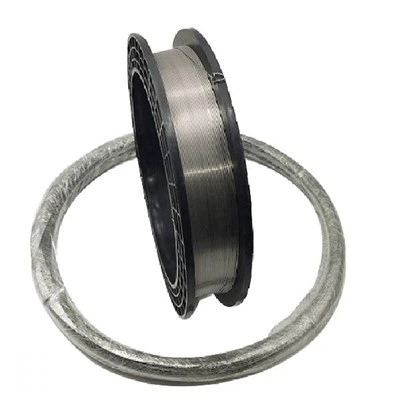
First, let’s start with the basics: raw niobium. It’s a silvery, soft metal that naturally forms a super thin oxide layer on its surface when it’s exposed to air—like, literally a few nanometers thick. This tiny layer gives it mild corrosion resistance, but if you’re putting it in harsh environments (think: chemical processing plants, liquid helium pipes for MRI machines, or implants inside a human body), that layer is nowhere near enough. It’s fragile, can scratch off easy, and doesn’t protect against aggressive acids or body fluids. So surface treatments aren’t just a “nice to have”—they’re a must for most industrial and medical uses.
Let’s talk about the most common surface treatments we do as a supplier: passivation, anodization, and thin-film coating. Each one changes niobium’s properties in a different way, and I’ve watched clients flip their entire production line after using the right one.
Passivation is the OG of niobium surface treatments—super simple, uses acidic solutions (usually nitric acid, sometimes a mix with hydrofluoric acid but only in controlled doses) to thicken that natural oxide layer. Wait, no, not just thicken—repair it. Raw niobium often has tiny surface defects from machining or handling, right? Those little dents or scratches leave spots where the thin oxide is missing, which can start corroding. Passivation fills those gaps, grows the oxide layer to like 100 nanometers, and makes it way more uniform. For clients in the chemical industry, this is non-negotiable. Last year, a guy who builds reactor components came to me with raw niobium sheets—his first batch started corroding after 6 months in a sulfuric acid environment. We passivated another batch, and 18 months later, he still hasn’t had a single failure. Why? The thick, uniform oxide layer prevents the acid from reacting with the pure niobium underneath. Raw niobium would start dissolving slowly in that acid, but passivated niobium just sits there. Also, passivation doesn’t change niobium’s surface roughness much—so if you need the metal to fit tight into a pipe or a part that needs precision, passivation is the way to go. No warping, no texture change, just way better corrosion resistance.
Next up, anodization. This is where we crank up the volume—electric current in an electrolyte bath to grow an even thicker oxide layer, like 1 to 10 micrometers, way thicker than passivation. Anodized niobium is a game-changer for two big areas: aerospace and medical implants. Let’s start with aerospace. Niobium is used in rocket engines because it has a super high melting point (around 2,468°C, higher than most metals), but raw niobium oxidizes fast when it’s heated above 1,000°C—turns into a powdery oxide that falls off, which is bad for a rocket part that’s supposed to hold up during launch and reentry. Anodization grows a dense, tough oxide layer that acts as a thermal barrier. We did parts for a satellite component last year—they’re exposed to extreme temperature swings, from -200°C in space to 1,500°C during engine burns. The anodized layer didn’t crack or flake, and the niobium underneath stayed intact. Raw niobium would have oxidized through in a few burns. For medical implants, anodization gives niobium biocompatibility that’s unmatched. Wait, raw niobium is already biocompatible, but anodized niobium has a porous, rough surface that bone cells love—they grow into the oxide layer instead of just sitting on top. That means implants integrate better, less chance of rejection, and shorter recovery times for patients. A orthopedic client we work with switched from raw to anodized niobium hip stems, and their implant failure rate dropped by 30% in two years. Also, anodization can color niobium—no paint needed, just control the voltage during treatment, and you get that deep blue or purple niobium that’s used in surgical tools and even jewelry. But here’s the catch: anodization does make the surface a bit rougher, so if your part needs a super smooth finish, you might want to pair it with a light polishing after.
Then there are thin-film coatings—like PVD (physical vapor deposition) coatings, where we deposit a thin layer of another material (titanium nitride, gold, or even diamond-like carbon) onto niobium. This is for super specific uses, like superconducting parts or electronics. Niobium is a superconductor at low temperatures, perfect for MRI and particle accelerators, but sometimes you need a coating to boost that superconductivity or add conductivity where you need it. We work with a lab that builds particle accelerator cavities—they coat niobium with a thin layer of niobium-titanium to make it more efficient at superconducting temperatures. Raw niobium would have had tiny impurities on the surface that disrupted superconductivity, but the thin-film coating smooths those out and makes the superconducting performance way better. For electronics, gold coatings on niobium connectors prevent oxidation and improve electrical conductivity, way better than raw niobium, which can form an oxide that messes with current flow. The downside here is cost—thin-film coatings are more expensive than passivation or anodization, so they’re only for projects where every bit of performance matters.
Now, let’s talk about properties beyond corrosion and thermal resistance—surface treatment also affects niobium’s mechanical properties, like hardness and wear resistance. Raw niobium is soft, right? If you have a part that rubs against another part, it can scratch or wear out fast. Anodization makes the oxide layer super hard—like, 10 times harder than raw niobium. So that hip stem I mentioned earlier? The anodized layer doesn’t scratch against the bone, so the implant lasts longer. Passivation is still a bit soft, but it’s enough for parts that don’t have constant friction. Thin-film diamond-like carbon coatings make niobium almost scratch-proof, which is great for parts that need to move a lot. Also, surface treatment affects biocompatibility in other ways—raw niobium can sometimes release tiny metal ions into the body, which causes irritation in some patients, especially those with metal allergies. Anodization seals those ions in the oxide layer, so they can’t leach out. That’s why so many dental implants now use anodized niobium—no more patient complaints about metal taste or irritation.
Wait, but I should be real here—surface treatment isn’t one-size-fits-all. I’ve had clients come in saying “just treat the surface to make it better,” but they don’t realize their project needs a specific treatment. Last quarter, a client in nuclear energy asked for a treated niobium part. We suggested anodization because of corrosion resistance, but he tried passivation first and it failed. Turned out, the nuclear environment is way harsher than chemical processing, so he needed that thick anodized layer. I always make sure to ask clients about their exact use case—what temperature, what environment, what performance they need—before recommending a treatment. As a supplier, my job isn’t just to sell niobium; it’s to make sure the treated surface actually works for their project.
Another thing: surface treatment affects niobium’s appearance too, but that’s less about performance and more about practicality. Raw niobium is matte silver, but passivation gives it a slightly duller gray, anodization can be custom-colored, and thin-film gold coating is bright gold. For parts that need to be identifiable—like components in a medical device that have to pass FDA inspections—colored anodized niobium makes them easy to track. But again, that’s a secondary benefit, not the main reason clients come to me.
Now, let’s get to the mistakes I see new folks make. A lot of engineers think “more treatment is better,” but over-treating niobium can cause problems. For example, anodizing too long can make the oxide layer too thick, which becomes brittle and cracks when the metal expands or contracts. I had a client last year who anodized a niobium pipe for a cryogenic system, and the layer cracked when the pipe was cooled to liquid nitrogen temps. We fixed it by reducing the anodization time to get a thinner, more flexible layer. Another mistake is not prepping the surface before treatment—if raw niobium has oil or machining residue on it, the surface treatment won’t stick. That’s why as a supplier, we always clean and polish our niobium before any surface treatment, to make sure the layer is uniform and strong.

So, to wrap this up: surface treatment turns niobium from a solid, reliable metal into a material that can handle the toughest jobs. Passivation fixes corrosion for chemical parts, anodization boosts thermal and biocompatibility for aerospace and medical implants, and thin-film coatings push superconductivity and conductivity for high-tech electronics. As a niobium supplier, I’ve seen firsthand how a good surface treatment can make a client’s project succeed, and a bad one can make it fail.
Tungsten Products If you’re working on a project that needs niobium, whether it’s for a reactor, an implant, a rocket part, or electronics, don’t guess on surface treatment. Tell me what you’re building, what it has to withstand, and we’ll figure out the right surface tweak to make it work. No guesswork, no overpriced treatments, just exactly what you need. Reach out to talk through your needs.
References
- Smith, A. et al. (2021). "Surface Oxidation Effects on Niobium Corrosion Resistance in Acidic Environments." Journal of Materials Engineering and Performance.
- Lee, S. et al. (2019). "Anodized Niobium for Orthopedic Implants: Surface Roughness and Bone Integration." Journal of Biomedical Materials Research Part B.
- Garcia, M. et al. (2022). "Superconducting Niobium Thin-Film Coatings for Particle Accelerators." Nuclear Instruments and Methods in Physics Research Section A.
Address: Wangjing Science and Technology Park, Guangshun North Street, Chaoyang District, Beijing
E-mail: sales@moly-tungsten.com
WebSite: https://www.moly-tungsten.com/
