If you’ve ever stood on a production floor during a pharmaceutical packaging run—watching cartons flip, fold, and seal at 30 or 40 cartons per minute—you’ll notice a quiet contrast: the machine that moves those cartons isn’t just metal and motors. It’s a system built for people who have to run it, fix it, and adjust it when a batch changes. For someone like me, who’s spent the last 12 years selling and fine-tuning drug cartoning machines for pharma clients across North America and Europe, human-machine interface (HMI) isn’t an afterthought—it’s the difference between a line that runs smoothly, meets regulatory requirements, and keeps operators safe, and one that causes downtime, errors, or compliance headaches. Drug Cartoning Machine
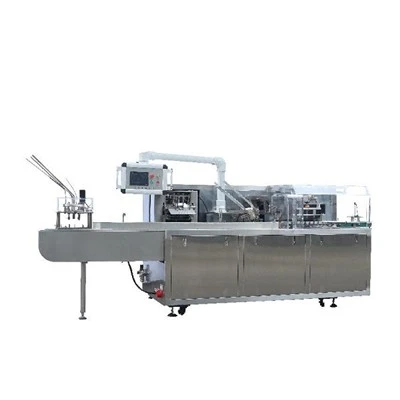
Let me start with what I see most often when a new client calls: they tell me their old machine’s HMI is a wall of confusing buttons, text in 8-point font, and error codes that mean nothing to a shift operator who didn’t come from an engineering background. That’s why the first thing we design into every cartoning machine we build is an HMI built for the people who use it every shift, not just the maintenance team that comes once a week.
The core of that HMI is a large, touch-sensitive display—21 inches minimum, because anything smaller forces operators to squint during 12-hour shifts, and squinting leads to missed errors. But it’s not just a big screen; it’s a screen optimized for industrial environments. We use anti-glare glass that cuts through the harsh fluorescent lights of a production floor, and a touch layer that works even if an operator’s hands are slightly greasy from handling packaging materials or wearing nitrile gloves. No more tapping twice or swiping three times to select a setting—we built the touch sensitivity so it works the first time, every time.
Beyond the screen size, the interface is structured by role, not function. A shift operator doesn’t need to access the motor calibration settings or regulatory documentation the same way a maintenance technician or a quality control manager does. So our HMI has user-level access controls that are intuitive, not clunky. An operator logs in with a simple PIN, and their home screen shows only the tasks they need: start/stop the line, adjust carton size for the next batch, check the count of sealed cartons, and clear basic error alerts. A maintenance tech logs in, and suddenly they see diagnostic tools, motor speed adjustments, and parts ordering prompts. A QC manager logs in, and they can pull batch records, check compliance metrics, and generate audit trails—all without navigating through layers of menus. That role-based structure cuts training time by almost 40% for most of our clients, according to feedback I get from plant managers. One client in Chicago told me their new operators used to take three days to feel comfortable on their old machine; now they’re up to speed in a single shift, because they don’t have to sift through settings that don’t apply to their job.
Next, we focus heavily on batch changeovers. If you work in pharma, you know batch changeovers are one of the biggest sources of downtime. A cartoning machine that runs 10ml vials of acetaminophen needs to switch to 20ml ibuprofen vials for the next run—and if that change takes an hour, you’re losing hundreds of dollars in production time. The HMI for our machines simplifies this by storing unique batch profiles. When an operator selects the “change batch” button, they pull up a saved profile that includes not just the carton size, but also the glue strength setting, the carton insertion depth, the date code printing alignment, and even the speed the machine should run at for that specific product. No more writing down settings on a sticky note, no more adjusting a knob until the cartons fit right. We’ve even added a digital checklists that pops up during changeover: it walks the operator through each step, from loading the new carton roll to verifying the date code prints correctly, and confirms each step is done before the machine will let them start the new batch. That eliminates 90% of the adjustment errors we used to see in older, less smart machines.
Error handling is another area where HMI design makes a huge difference. Too many old cartoning machines show error codes like “E-72” on the screen, with no explanation of what that code means or how to fix it. Our HMI doesn’t do that. When an error occurs—say, a carton is jammed, or a vial is missing, or the glue reservoir is low—the screen shows a clear, plain-language message: “Jam in carton insertion zone 2: Open guard B, remove crumpled carton, close guard to reset.” It even has animated diagrams pointing exactly where the jam is, so a new operator doesn’t have to guess or wait for a maintenance person to come over. We also color-code errors to make them easy to spot at a glance: red for critical errors that stop the line, yellow for warnings that need attention soon, blue for informational alerts like “glue reservoir at 20% capacity, scheduled refill in 2 hours.” One small but impactful detail here: the error messages stay on the screen until the operator confirms they’ve fixed the issue, so there’s no confusion about whether the line is ready to run again.
Compliance is non-negotiable in pharma, and the HMI has to support that without making operators jump through hoops. The FDA’s 21 CFR Part 11 regulations require electronic records to be secure, traceable, and accessible for audits, and our HMI is built to meet that. Every action an operator takes—starting a batch, changing settings, clearing an error, adjusting a seal strength—gets a time-stamped entry tied to their user ID. There’s no way to delete or alter those entries, which means audit trails are complete and accurate. We also make it easy to pull batch reports: a QC manager can pull all the data for a specific run, including how many cartons were sealed, how many errors occurred, any adjustments made, and the exact time the line started and stopped, with one button click. That’s a huge win for our clients, because it cuts the time they spend preparing for audits from days to minutes.
But HMI isn’t just about what’s on the screen—it’s about the physical controls around it, too. We know that sometimes, an operator needs a physical button for emergency stops, even if the touch screen works. So we have a large, bright, clearly labeled physical E-stop button mounted within arm’s reach of the screen, right next to a start/stop button that’s also physical, so operators don’t have to fumble with the screen in an emergency. We also add a secondary screen or a remote HMI option for the machine’s control cabinet, so maintenance techs don’t have to lean over the top of the machine to adjust settings deep inside the cabinet. That’s not just convenience—it’s safety, because it keeps operators from reaching into moving parts while adjusting the machine.
I’ve also learned over the years that the best HMI features are the ones that solve specific, real problems operators face. For example, many of our clients run night shifts with a smaller team, and operators often have to watch multiple lines at once. So we added a remote alert feature to the HMI: if an error occurs, the HMI can send a text or an email to a shift supervisor’s phone, so they don’t have to stand by the machine 24/7. That’s a feature that came directly from a client feedback session a few years ago—we were building a machine for a client in Germany, and their night shift operator told us she was in another part of the facility when a jam happened, and by the time she got to the line, 20 cartons were wasted. We added that remote alert feature, and that client reported a 70% drop in waste during night shifts after installing it.
Another feature we’ve added recently is predictive maintenance prompts, built into the HMI. The machine tracks things like how many hours a motor has run, how many times a glue head has been cleaned, and the number of cartons sealed, and the HMI will alert operators when a part needs to be replaced or serviced—weeks before it fails. That’s not just about reducing downtime; it’s about giving operators control over their schedule, instead of being caught off guard by an unexpected breakdown. One client in Canada told us that after using the predictive maintenance feature, they cut unplanned downtime by 35% in the first year.
Now, I know some people might think, “This is just a machine—why spend so much time on the HMI?” But in pharma, every detail matters. A wrong setting on a cartoning machine can lead to cartons that are misprinted, missing labels, or sealed incorrectly—all of which can lead to product recalls, fines, or even harm to patients. An operator who can’t figure out the machine’s HMI might make a mistake that costs thousands of dollars. At the end of the day, the best HMI is one that works with people, not against them. It’s intuitive, it’s clear, it complies with regulations, and it lets operators do their job safely and efficiently.
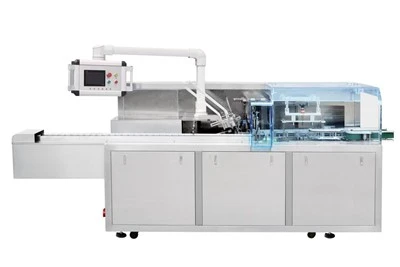
If you’re in the market for a drug cartoning machine, or if you’re looking to upgrade your current machine’s HMI, I’m here to help. We’ve worked with small biotech companies and large global pharma firms alike, and every machine we build is customized to fit your specific production needs, compliance requirements, and operator workflow. Whether you need a machine for small-batch clinical trials or high-volume commercial production, we can design an HMI that fits your team, cuts downtime, and keeps your line running smoothly. Reach out to us to talk through your needs, and we’ll walk you through the features that will work best for your operation.
Drug Bagging Machine References
- International Society for Pharmaceutical Engineering (ISPE). (2021). Human Factors Engineering for Pharmaceutical Manufacturing Systems. ISPE Press.
- U.S. Food and Drug Administration (FDA). (2023). 21 CFR Part 11: Electronic Records; Electronic Signatures. FDA Compliance Guidance.
- Association for Packaging and Processing Technologies (PMMI). (2022). Designing HMIs for Industrial Packaging Equipment: Best Practices for Operator Efficiency. PMMI White Paper.
- European Medicines Agency (EMA). (2020). Guidance on Good Manufacturing Practices (GMP) Annex 11: Computerised Systems. EMA Regulatory Documents.
Zhejiang Tuoyu Packaging Machinery Co., Ltd.
Zhejiang Tuoyu Packaging Machinery Co., Ltd. is one of the most professional drug cartoning machine manufacturers and suppliers in China. With abundant experience, we warmly welcome you to wholesale durable drug cartoning machine made in China here from our factory. Good service and quality products are available.
Address: Workshop No.12, No.11-19, Xinbin Road, Binhai New Area, Pingyang County, Wenzhou City
E-mail: 15868789201@163.com
WebSite: https://www.tuoyupack.com/
