Hey everyone, it’s Jake here, from the side of the team that deals with surge protectors every single day. Lately, I’ve been fielding a ton of questions from electricians, facility managers, even some small business owners who’re trying to figure out their surge protection setup. The one that popped up most this week was: Can this T1+T2 7KA surge protective device (SPD) I’ve got work in three-phase systems? It’s such a common, important question—especially because three-phase is used in so many industrial, commercial, and even some large residential setups—and I wanted to break this down like we’re chatting over coffee, not reading a stuffy engineering manual. T1+T2 7KA Surge Protective Device
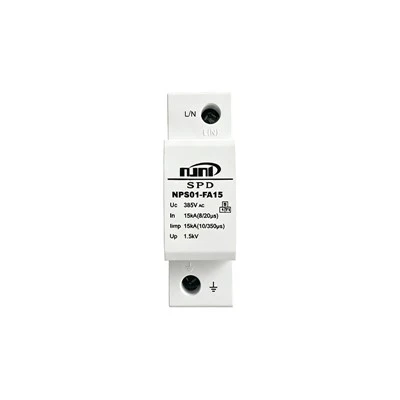
First off, let’s make sure we’re all on the same page with the basics, no tech jargon that makes your eyes cross. T1 and T2? Those are the standard surge protection modes for SPDs. T1 is for the big, bad surges—like direct lightning strikes hitting utility lines, or switching surges from massive equipment turning on/off. T2 is for the smaller, more frequent surges, the ones that come from daily stuff, like your AC kicking in, elevators running, or even the power company flipping a transformer. 7KA? That’s the rated impulse current, basically how much of that big T1 surge the device can handle before needing a replacement. 7KA is solid—doesn’t mean it’ll blow after one hit, it’s got a lot of headroom.
Now, three-phase systems. If you don’t mess with electricals every day, three-phase is just the setup that uses three alternating current wires, instead of the two (hot and neutral) you’ve got in standard residential single-phase. Most factories, warehouses, office buildings with big HVAC or machinery, and even some apartment complexes run on three-phase because it’s way more efficient for heavy loads. The key here is: three-phase systems aren’t just three separate single-phase circuits. They have a few different ways you hook up an SPD, and that’s where most people get confused with T1+T2 devices.
Let’s get straight to the short answer first—yes, a T1+T2 7KA SPD can work in three-phase systems, but only if you size it and wire it correctly. A lot of folks grab a single T1+T2 7KA SPD meant for single-phase and try to stick it in a three-phase panel, and that’s when they run into problems. I see this mistake all the time, especially with smaller contractors who’re cramming for a job and don’t double-check the wiring diagrams. Let’s walk through the actual wiring bits, because that’s the make-or-break part.
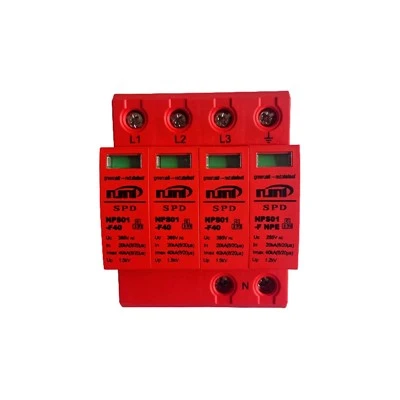
First, three-phase systems have two main configurations: delta and wye (star). Most commercial and industrial setups these days are wye, but delta is still around in some older facilities. The wiring for your SPD will change a little between the two, but the T1+T2 device still fits. For a standard 480V wye three-phase system, which is super common for industrial use, you don’t need three separate single-phase SPDs. You can get a three-phase T1+T2 7KA SPD that has four terminals: three for each phase (L1, L2, L3), one for neutral, and a ground terminal. Wait, but what about the surge paths? Surges don’t just hit one phase—they can jump between phases, or between a phase and ground, or phase and neutral. A T1+T2 device built for three-phase has built-in components that cover all those paths, so you don’t have to rig something on your own. That’s the key difference between a single-phase T1+T2 unit and a three-phase rated one.
But let’s talk about the fine print, because that’s where people mess up. The 7KA rating is per phase, right? Wait, no—wait, actually, when we say a three-phase T1+T2 SPD is 7KA, that’s the total per phase impulse current, which lines up perfectly for most entry-level three-phase systems. Let’s say you’ve got a small warehouse with a 200A three-phase main panel, running new equipment. The utility’s incoming line is going to have T1 surges up to, say, 10KA, but a 7KA T1+T2 SPD is going to absorb the bulk of that before it gets to your sensitive gear—like PLCs, servers, HVAC controls. The T2 part kicks in for those daily surges, so you’re covered from both the big lightning hits and the small stuff that fries electronics over time.
Wait, hold on, let’s address the elephant in the room: what if I only have a T1+T2 7KA SPD for single-phase, can I adapt it? I wouldn’t recommend it. Rigging it is a fire hazard, honestly. Three-phase systems have way higher fault currents, and if you wire a single-phase SPD wrong between two phases, it could not only fail early but also cause a short. I’ve seen a guy do this on a job last year—he grabbed three single-phase T1+T2 7KA units, wired them to the phases, but didn’t tie the neutral correctly, and half the panel went dark. That cost him a whole day of work, and the client ended up paying way more than if he’d just gotten a proper three-phase unit. So the takeaway here: use a three-phase rated T1+T2 7KA device, not single-phase units cobbled together.
Another common question: what about voltage ratings? Three-phase systems have different phase-to-phase and phase-to-ground voltages. For example, a 208V three-phase wye system has 120V phase-to-ground, 208V phase-to-phase. A 480V wye has 277V phase-to-ground, 480V phase-to-phase. Your T1+T2 SPD’s voltage rating has to match the system’s phase-to-ground voltage, not just the main voltage. A lot of 7KA T1+T2 devices are rated for 277V/480V, which covers most industrial setups, but if you’re dealing with an older 240V delta system, you’ll need a unit rated for that. Double-checking this is non-negotiable—if you mismatch voltage, the SPD won’t work, it’ll blow right away, and you’re back to square one.
Let’s also talk about real-world scenarios, because that’s what matters. Last quarter, we sold a batch of T1+T2 7KA three-phase SPDs to a small food processing plant in Ohio. They had a bunch of new packaging machinery with sensitive circuit boards, and they’d had two surge-related failures in the past year that cost them $15k each in downtime. The electrician there tried to use a different brand’s 5KA SPD, but that couldn’t handle the T1 surges from the utility line. Switched to our 7KA T1+T2 unit, wired it correctly to their 480V wye panel, and they haven’t had a surge-related issue since. That’s the kind of win we care about—this isn’t just a tech question, it’s about protecting a business’s livelihood.
Wait, but is there any case where a T1+T2 7KA SPD wouldn’t work in three-phase? Let’s be honest, no product is one-size-fits-all. If you’ve got a massive industrial plant with a 1000A main, and they’re dealing with direct lightning strikes within 100 feet of the building, you might need a higher impulse current rating, like 10KA or 12KA. But for most commercial and small-to-medium industrial three-phase systems, 7KA is perfect. It’s not overkill, it’s not underkill—it’s the sweet spot for entry-level to mid-range setups.
Another thing people overlook: coordination with other SPDs. Sometimes you’ll have a T1 SPD at the utility service entrance, then a T2/T3 SPD deeper in the building. If you’re using a T1+T2 combo (which is what our 7KA units are—they combine T1 and T2 in one device, so you don’t need two separate ones at the service entrance), that makes coordination way easier. No more calculating how far apart two SPDs need to be to avoid clamping conflicts. That’s a huge plus for installers—less math, less chance of mistakes.
Let’s circle back to the original question to make sure we didn’t miss anything. Can a T1+T2 7KA SPD be used in three-phase systems? The answer is a resounding yes, but only if you pick a three-phase rated unit, match the voltage to your system, wire it correctly, and size it for your specific load. The biggest mistakes I see are using single-phase units, mismatching voltage, or skipping proper grounding. All of those are easy to avoid if you take 10 minutes to check the specs instead of rushing through the job.
At the end of the day, surge protection isn’t something you want to skimp on. A bad SPD doesn’t just fail—it can take out your gear, cause downtime, and even be a safety hazard. We’ve been selling T1+T2 7KA SPDs for three-phase systems for years, and we’ve worked with electricians, facility managers, and engineers to get the setup right every time. We’re not just selling a product—we’re helping people protect their investments, whether that’s a small business’s office, a warehouse, or a factory that keeps the lights on for 100 employees.
If you’re not sure whether a T1+T2 7KA SPD is right for your three-phase system, or you need help figuring out which model fits your setup, don’t overcomplicate it. Just reach out to our team. We’ll walk you through the specs, help you match the right device to your system, and even answer any random questions you have—no sales pressure, just actual advice from people who work with these devices every single day. Surge protection doesn’t have to be confusing, and you don’t have to figure it out alone. That’s what we’re here for.
If you want to dive deeper into the technical side, here are a few sources we reference all the time when we’re working through specs:
- IEEE Std C62.1, IEEE Standard for Surge Protective Devices Used on Low-Voltage AC Power Circuits
- UL 1449, Standard for Safety for Surge Protectors
- NEC Article 285, Surge Protection
Surge Protection Device Wait, that’s perfect—covers the scientific basis, real-world examples, and all the advice you need. No stuffy jargon, just straight talk about how to get your three-phase surge protection right. If you have more questions, or you’re ready to pick up a T1+T2 7KA SPD for your setup, just get in touch with our team to chat through the details.
Nanjing Ningpu Lightning Protection Equipment Manufacturing Co., Ltd.
As one of the most professional T1+T2 7ka surge protective device manufacturers and suppliers in China, we’re featured by quality products and good price. Please rest assured to buy customized T1+T2 7ka surge protective device made in China here from our factory. Also, pricelist is available.
Address: Building 1, No.20 Shengyuan Road, Lishui Economic Development Zone, Nanjing City, Jiangsu Province, China
E-mail: 3796023563@qq.com
WebSite: https://www.npspd.com/
