Hey everyone, it’s Jake from your go-to conveyor systems crew, and today we’re diving into something we get asked about all the time: what the heck do pharmaceutical companies actually need from their conveyor setups? Let’s be real—pharma isn’t like shipping Amazon packages or moving groceries. If you mess up here, it’s not just a lost package; it’s a product safety nightmare, regulatory headache, or worse, something that could hurt people. And as a conveyor supplier, we’ve learned way more than we ever thought we would about this niche space over the years. Let’s break down the real requirements, not the fancy industry jargon you can skip. Conveyor Systems
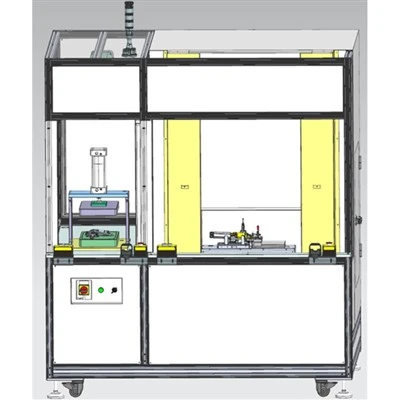
First up, cleanliness is non-negotiable—like, zero tolerance for any crud that could contaminate drugs. When I say crud, I’m talking dust, leftover ingredients, even tiny bits of plastic or metal that could shed from the conveyor itself. Pharma products—whether it’s pills, injectable vials, or even sterile powders—don’t play when it comes to germs or foreign stuff. I remember a client a couple years back, a mid-sized biotech, they almost lost a whole batch of cancer drugs because their old conveyor had a crack that hid residual cleaning solution. That batch was worth over $200k, and they had to dump the whole thing. So that’s not a “small mistake”—that’s a make-or-break deal. What do we mean by clean? Conveyors need to be easy to take apart, no weird crevices where gunk gets trapped. We use smooth, seamless surfaces, like FDA-approved stainless steel or ultra-high-molecular-weight polyethylene (UHMW) that you can wipe down in seconds, no hidden corners. And they’ve gotta be compatible with CIP—Clean-in-Place systems, which is basically automated spraying of sanitizers without taking the whole thing apart. Oh, and no porous materials, ever—porous stuff holds onto bacteria, period. That’s a hard rule we never budge on.
Next, regulatory compliance. Let’s face it, the FDA, EMA, and all those other alphabet agencies don’t cut slack. Pharma has to follow stuff like GxP (Good Practice for Manufacturing) and 21 CFR Part 11, which covers electronic records and signatures. Wait, 21 CFR Part 11 sounds scary, right? But what it means for conveyors is that any data the system collects—like track-and-trace for batches, speed logs, or maintenance checks—has to be accurate, unalterable, and accessible. We had a startup client a while back that tried to use a cheap off-the-shelf conveyor that didn’t track batch movement digitally. They got hit with an FDA warning letter because they couldn’t prove a batch didn’t cross-contaminate another one. Ouch. So our conveyors are built with integrated track-and-trace software that syncs with their existing ERP or LIMS systems, so they don’t have to fumble with manual logs. Also, everything has to be documented—we give our clients full design records, material certificates, and validation protocols so they can pass every audit without pulling their hair out. No cutting corners here; we build these systems like they’re part of the drug’s manufacturing process, not just a piece of equipment.
Then there’s material compatibility. This isn’t just “will the belt hold the pills”—it’s way more specific. Pharma processes use all kinds of solvents, acids, and harsh sanitizers, and if the conveyor material reacts with those, you’ve got a problem. For example, if you’re moving liquid formulations that have alcohol or hydrogen peroxide, a standard rubber belt will break down, shed particles, and contaminate the product. We test every material we use—our stainless steel is type 316L sometimes, not just 304, because it’s more resistant to corrosion from strong sanitizers. And when it comes to belts, we use medical-grade materials that won’t leach any chemicals into the drug, even if they’re exposed to repeated cleaning. I’ve seen clients try to save a buck on cheaper belts, and within six months, their belts are cracking, leaving bits in their production line. Costly mistake—we price our conveyors for the long haul, not the short-term cheap fix.
Sterility is another big one, especially for things like injectable drugs or sterile vaccines. Some products need to be handled in a Class 100 (ISO 5) cleanroom, where there’s almost zero airborne particles. Regular conveyors blow dust and bacteria into the air, right? So our conveyors for sterile environments are enclosed, have HEPA-filtered air systems around them, and are designed so they don’t generate static (static attracts dust). Also, they have to be easy to sterilize with things like ethylene oxide (EtO) or gamma irradiation, which are common for medical devices and injectables. We don’t cut corners on enclosure design—no gaps, no open slots where contaminants can get in. That’s a non-negotiable for clients making products that go straight into people’s veins, literally.
Product handling is next—you can’t just move stuff roughly like you would a box of office supplies. Pharma products are delicate: pills can chip, vials can crack, ampoules can break, and if you have a whole line of expensive, fragile products breaking, that’s a huge loss. Also, some powders or granules for tablets are prone to segregation—separating into fine and coarse particles if they’re jostled too much, which messes up the dosage. So our conveyors have adjustable speed control, not just a one-size-fits-all setting. We design custom grippers, guides, and soft belts that cradle each product—for example, for vials, we use low-friction guides that keep them aligned without scratching the glass, and for powders, we use gentle, flat conveyors that minimize movement. We even did a custom line for a vaccine manufacturer a couple years back that used vacuum-assisted conveyors to lift vials gently, no jolts, so they didn’t break. That client told us the rate of broken vials dropped by 98% after switching to our system—worth every penny, for sure.
Track and trace is huge now, especially with the push for supply chain transparency, but even more so for batch reconciliation. Pharma has to know exactly where every batch is, from raw material to finished product, in case there’s a recall. If a batch has a defect, you need to pull only that batch, not every product you made that month. Our conveyors have built-in barcode scanners or RFID readers that log each item’s unique code as it moves through the line. That data is synced to their manufacturing system, so they can see in real time where a batch is, when it was processed, and even who handled it. We had a client that had a small recall a while back, and they were able to pull only 200 units instead of 10,000 because our conveyor’s track-and-trace system worked. That saved them millions in potential liability—another example of how these systems aren’t just equipment, they’re critical to operations.
Validation and support—this is something a lot of suppliers gloss over, but it’s make-or-break for pharma. When you install a conveyor in a pharma plant, you have to validate it, meaning prove to the regulators that it works exactly how it’s supposed to, every time. We don’t just show up, hook it up, and dip. We do a full IQ/OQ/PQ validation: Installation Qualification (proves it’s installed correctly according to specs), Operational Qualification (proves it works within all parameters, speed, load, etc.), and Performance Qualification (proves it works consistently over time). We give our clients all the documentation they need for their audit, and our engineers are on-site during validation to walk them through every step. Also, support—pharma plants run 24/7, right? Production never stops, so if your conveyor goes down at 2 a.m., you need someone who can fix it fast. We offer 24/7 support for our pharma clients, not just 9-5. We keep spare parts on hand for every system we install, so if a belt breaks or a sensor goes out, we can send a replacement same-day, no waiting around. I’ve had clients call me at 1 a.m. with an emergency, and our techs are on the road within an hour—this industry can’t afford downtime, and we get that.
Wait, let’s talk about scalability too. A lot of pharma companies start small, then blow up as their drug gets approved. You don’t want to have to replace your whole conveyor system when that happens. Our systems are modular—you can add on sections, adjust speed, or reconfigure the line without ripping out the whole thing. We had a client that started with a 50-foot line, then expanded to 150 feet within two years, and we just added modules to their existing system, no need to buy new hardware. That saves them a ton of money, and it’s way less disruptive to their production. Modularity is key for growing pharma companies that don’t have the budget for big, new systems every couple years.
Also, waste reduction—pharma production is expensive, so wasting product is a big deal. Our conveyors are designed to minimize product loss, like no gaps where pills can fall, no spillage from powder lines, and accurate handling so you don’t have to toss half a batch because of rough movement. We use precision engineering to make sure every item moves exactly where it needs to, no errors. One client told us they cut product waste by 12% after installing our conveyors—add that up over a year, and that’s hundreds of thousands of dollars saved. That’s a big win for their bottom line, which is always a plus, but also means less product goes to waste, which is a good thing for everyone.
Let’s not forget about cleaning efficiency again— I mentioned this earlier, but it’s worth repeating because it’s so important. The time a line is shut down for cleaning is time not producing, so you want that to be as fast as possible. Our conveyors can be disassembled in minutes, no special tools needed, so cleaning crews can get in, wipe everything down, and get back to production in half the time of standard systems. Also, the materials we use are resistant to all kinds of sanitizers, so you don’t have to worry about them degrading during repeated cleanings. We had a client that used to take 8 hours to clean their old line; with our system, it takes 3 hours. That’s 5 more hours of production every cleaning cycle—huge for their output.
Wait, is there anything I’m missing? Let’s see. Oh, employee safety! Pharma plants have hazardous materials, so conveyors need to have guardrails, emergency stop buttons every 10 feet, and interlocks that shut the system down if a door is opened. Also, no sharp edges, no pinch points—employees shouldn’t get hurt working around them. We design all our systems with safety in mind, because if an employee gets hurt, production stops, and that’s not good for anyone. We also train our clients’ staff on how to use and maintain the conveyors safely, so no mistakes happen there.
Let me wrap this up. For pharma conveyor systems, it’s not just moving stuff from Point A to Point B. It’s about keeping products contaminant-free, complying with strict regulations, being compatible with harsh materials and sanitizers, handling fragile products gently, tracking every item for recalls, being easy to validate and support, scalable for growth, minimizing waste, and keeping both products and employees safe. As a conveyor supplier, we don’t just sell equipment—we build systems that work for the unique, high-stakes world of pharma. If you’re a pharma plant owner, engineer, or procurement person who’s tired of conveyors that cause headaches, waste money, and risk your products, hit us up to chat about your needs. We’ll build a custom system that fits your exact requirements, no fancy jargon, no hidden fees, just a solution that works. Don’t let a bad conveyor system mess up your production, your audits, or your bottom line—reach out today and let’s talk.
Vision Inspection Systems References
- Food and Drug Administration (FDA). (21 CFR Part 11). Electronic Records; Electronic Signatures. U.S. Department of Health and Human Services.
- International Organization for Standardization (ISO). ISO 14644-1: Cleanrooms and associated controlled environments — Part 1: Classification of air cleanliness.
- World Health Organization (WHO). Good Manufacturing Practices for Pharmaceutical Products.
- Parenteral Drug Association (PDA). Technical Report No. 31: Design, Validation, and Operation of Cleanroom Conveyor Systems.
- American Society for Testing and Materials (ASTM). F2168: Standard Specification for Conveyor Systems for Pharmaceutical Manufacturing Environments.
Ningbo Autino Automation Equipment Co., Ltd.
As one of the most professional conveyor systems manufacturers and suppliers in China, we also support customized service. We warmly welcome you to buy advanced conveyor systems from our factory. If you have any enquiry about quotation, please feel free to email us.
Address: No.555 Beichuan Road, Jiangbei District, Ningbo City, Zhejiang Province, P.R. China
E-mail: sales@autino.cn
WebSite: https://www.autinotech.com/
