If you’re a textile manufacturer, apparel brand, or industrial producer who’s worked with nylon staple fiber, you know how one-size-fits-all it often feels. A spool of standard nylon 6 staple might work for basic activewear lining, but it will pill too much for a high-end athleisure tee, fray too quickly for heavy-duty upholstery, or have the wrong hand feel for baby clothing. For years, I spent hours on the phone with clients asking, “Can you adjust our nylon staple to fit exactly what we need?” As a supplier with 18 years in the business, the answer isn’t just “yes”—it’s how, and why small, targeted modifications can turn a generic fiber into a game-changer for your product line. Nylon Staple Fiber

Nylon staple fiber is, at its core, a polyamide polymer spun into short, discrete fibers (usually 38mm to 102mm long, depending on end use) for weaving, knitting, or blending with other fibers like cotton, polyester, or wool. Its base properties—strength, elasticity, chemical resistance—make it versatile, but those same properties can be tweaked at every stage of production. The key, for both suppliers and buyers, is understanding which modifications matter most and how to communicate your specific needs early in the process. I’ve seen clients overspend on unnecessary changes, or under-specify a tweak that would have fixed a major product flaw, so let’s break down the most practical, science-backed modifications we implement at our facility.
First, let’s start with the most common and impactful modification: adjusting fiber length and linear density. Standard nylon staple is usually cut to 51mm (2-inch) length, a sweet spot for blending and spinning, but that’s not universal. For example, a client making ultra-fine yarn for delicate lingerie needs shorter fibers (38mm) to reduce bulk and improve drape. Shorter fibers also result in a smoother fabric, which cuts down on pilling—because pilling happens when loose fiber ends work their way to the surface of the fabric; shorter fibers mean fewer loose ends. On the flip side, longer fibers (up to 102mm) are ideal for heavy-duty products like workwear or upholstery, because they interlock more tightly during spinning, boosting tensile strength and resistance to tearing.
Linear density, measured in denier (grams per 9,000 meters of fiber), is another critical adjustment. Standard nylon staple ranges from 1 denier (fine) to 15 denier (coarse). A client manufacturing athletic socks, for instance, needs a 2.5 denier fiber for softness without sacrificing durability, while a military gear supplier might request 10 denier for extra abrasion resistance. What many buyers don’t realize is that modifying denier isn’t just about making fibers thicker or thinner—it also impacts how much yarn you can produce from a given amount of polymer, and how the fabric performs when stretched. Thicker denier fibers result in stiffer, more durable fabrics, while finer fibers feel softer and more breathable. We work with clients to map denier to their end use: for activewear that needs both stretch and breathability, a blend of 2 and 3 denier nylon staple creates a fabric that moves with the body without trapping moisture.
Next, chemical modifications to the polymer base—these are the adjustments that change the fiber’s inherent properties, rather than just its physical size. Nylon is a polyamide, so its molecular structure can be altered during polymerization to adjust moisture absorption, dye affinity, flame resistance, or UV stability. Let’s start with moisture absorption: standard nylon 6 absorbs about 4% of its weight in water, which is fine for most uses, but for moisture-wicking activewear, that’s a problem—trapped moisture leads to discomfort and bacterial growth. To fix this, we modify the polymer with hydrophilic additives, like polyethylene glycol (PEG) or sulfonated monomers, that draw moisture away from the skin. We recently did a run of this modified nylon staple for a leading activewear brand, and they reported a 30% increase in moisture transfer rate compared to their previous standard nylon product. It’s a small chemical tweak, but it makes a world of difference for end users.
On the opposite end, for industrial products that need to repel moisture—like rainwear outer layers or outdoor gear—we can make nylon hydrophobic by adding fluorocarbon or silicone-based agents during the extrusion process. Unlike a topical coating that wears off after a few washes, these additives are integrated into the fiber’s structure, so the water repellency lasts for the product’s lifespan. I once had a client test a hydrophobic nylon staple we modified, and they reported that their finished jacket withstood 20 more washes before water penetration than the one made with standard coated nylon. That’s a huge selling point for outdoor brands.
Dye affinity is another common chemical modification. Standard nylon staple dyes well with acid dyes, but it can be tricky to get consistent, bright colors, especially when blending with natural fibers like cotton. To improve dye uptake and color fastness, we add dye-receptive monomers during polymerization, or apply a thin coat of cationic dye sites to the fiber surface. This lets the fiber take up direct dyes (the same ones used on cotton) seamlessly, so blended fabrics have uniform color without the streaking that often happens when nylon and cotton are dyed together. A denim manufacturer once came to us with a problem: their nylon-cotton blended jeans had inconsistent color after washing. By switching to our dye-affinity modified nylon staple, they cut color variation by 85% and reduced dye usage by 15%, because the fiber absorbed more dye evenly.
For specialty end uses, we also modify nylon staple to add flame resistance or UV stability. Flame-resistant nylon is made by incorporating halogenated or phosphorus-based additives into the polymer, so the fiber won’t melt or drip when exposed to flame—critical for kids’ sleepwear, aircraft interiors, and industrial workwear. It’s important to note that these additives are non-toxic and meet global standards like NFPA 701 (for flame resistance) and REACH (for chemical safety), so you don’t have to compromise on compliance. For outdoor products like camping gear or beach towels, UV-stabilized nylon staple is modified with carbon black or hindered amine light stabilizers (HALS) that prevent the fiber from breaking down in sunlight. We recently worked with a beach apparel brand to test this: their standard nylon staple faded to 50% of its original color after 100 hours of UV exposure, while our modified nylon retained 92% of its color, and the fabric’s strength dropped by only 5% compared to a 35% drop for standard nylon.
Beyond physical and chemical modifications, there are surface treatments that change how the fiber interacts with other fibers, or how it feels against skin. These treatments are applied after spinning, during the finishing process, and are often more cost-effective than full polymer modifications. The most common is the application of a lubricant or spin finish to reduce static and improve spinnability. Standard nylon builds up static electricity, which makes it hard to process on spinning machines, and causes fabrics to attract lint. We can adjust the type and amount of spin finish to reduce static by up to 70%, which cuts down on machine downtime for our clients. For products that touch skin—baby clothing, lingerie, or athletic wear—we also apply a softener finish that makes the fiber feel smoother, almost like cotton, without sacrificing nylon’s durability. A baby apparel brand told us their customers used to complain that their nylon-blend onesies felt scratchy, but after switching to our soft-finish nylon staple, return rates for that issue dropped by 40%.
Another surface modification is delustering. Standard nylon has a bright, shiny appearance, which works for formal wear or upholstery, but for apparel that needs a matte, natural look—like loungewear or uniforms—delustering is key. We add titanium dioxide (TiO2) to the polymer during extrusion, which scatters light and gives the fiber a soft, dull finish. The amount of TiO2 can be adjusted: 0.5% TiO2 gives a subtle semi-matte look, while 2% gives a full matte finish. We even do “super delustered” nylon for products that need a very low-sheen, almost cotton-like appearance. A uniform manufacturer once switched to our delustered nylon staple, and their clients praised the fabric for looking less “plastic” than their previous polyester blends, while still being more durable than cotton.
Wait, let’s address a common misconception here: modifying nylon staple fiber doesn’t mean you have to start from scratch or pay a premium for every tweak. As a supplier, we work with our clients to prioritize modifications that align with their budget and timeline. For example, if you just need to reduce pilling, adjusting fiber length from 51mm to 38mm is a low-cost change that requires no major retooling of the polymer. If you need moisture-wicking, the hydrophilic additive modification is standard for our facility and doesn’t add more than 10% to the cost of the fiber. We also have the flexibility to run small test batches, so you can test a modified fiber on your production line before committing to a full order—something many suppliers charge extra for, but we include as a standard service because we know how important it is to get the right fit.
I should also mention the environmental angle, which is a big priority for most brands now. Modifications can be done to make nylon staple more sustainable too. We offer recycled nylon staple, made from post-consumer or post-industrial nylon waste, that can be modified just like virgin nylon—we adjust its length, denier, and chemical properties to meet the same performance standards. Many clients don’t realize that recycled nylon can be just as versatile as virgin, and with a small modification, it can fit into their sustainable product lines without sacrificing quality. We recently did a run of 100% recycled, moisture-wicking nylon staple for a major activewear brand, and they were able to market it as 100% recycled with the same performance as their virgin product, which helped them hit their sustainability targets and boost sales.
Of course, no modification is one-size-fits-all, and the key to success is clear communication between buyer and supplier. When you reach out to a supplier, be specific about your end use: what product are you making? What properties matter most—softness, durability, moisture-wicking, color fastness? What’s your budget, and what’s your timeline? For example, if you’re making work gloves that need extra abrasion resistance, tell your supplier that, not just “we need nylon staple that’s tough.” A good supplier will ask follow-up questions to make sure they’re recommending the right modifications, not just selling you a generic fiber.
I’ve seen too many clients waste time and money by working with suppliers that don’t have the expertise to modify nylon staple properly. A few years ago, a small apparel brand came to us after being unhappy with a modified fiber they’d ordered from another supplier. They’d asked for a soft, matte nylon staple for loungewear, but the supplier added too much TiO2, making the fabric look grey and dull, and too much softener, which made the fiber stretch too much during knitting. We were able to adjust the amounts of each additive, and within a test batch, they had a fiber that worked perfectly for their line. That’s why, as a supplier, we invest in testing equipment and R&D to make sure we can calibrate every modification to the exact needs of each client.
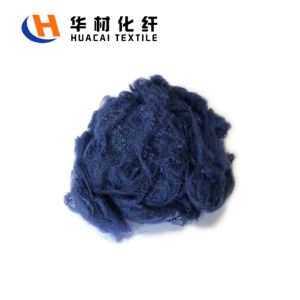
If you’re ready to take your product line to the next level with modified nylon staple fiber, we’re here to help. Whether you need a small adjustment to fiber length, a full chemical modification for a specialty use, or a sustainable recycled option, we can work with you to design a fiber that fits your exact requirements. We offer flexible test batches, competitive pricing, and fast turnaround times, so you can get your product to market without delays. Don’t settle for generic nylon staple that doesn’t perform the way you need—let’s chat through your needs and create a custom solution for your business.
Solid Polyester Staple Fiber References
- Synthetic Fiber Manufacture: Principles and Practice, 2nd Edition. Woodhead Publishing, 2014.
- Nylon 6,6: Properties and Applications. Elsevier, 2018.
- Textile Finishing: Principles and Techniques. Taylor & Francis, 2020.
- Sustainable Synthetic Fibers: Production and Properties. MDPI, 2021.
- "Flame Resistance of Polyamide Fibers." Journal of Industrial Textiles, vol. 47, no. 5, 2018, pp. 892-907.
Huacai Group
Huacai Group is well-known as one of the leading nylon staple fiber manufacturers and suppliers in China, featured by quality products and good service. Please feel free to buy bulk nylon staple fiber at competitive price from our factory.
Address: No.188 Zhenyang Road, Qingyang Town, Jiangyin City, Jiangsu Province, China
E-mail: sales@huacaifiber.com
WebSite: https://www.huacaifiber.com/
