If you’ve ever dug into mechanical components, you’ve probably heard of ball pins, but if you’re a buyer or even a guy troubleshooting a stuck machine, you’ve definitely wondered: what the heck is their friction coefficient, anyway? As a ball pin supplier, I get this question all the time—usually from engineers pulling their hair out trying to spec the right part, or maintenance guys guessing at a replacement because their old one wore out too fast. It’s not just a random number; this tiny value is the difference between a part that lasts 6 months and one that goes 5 years, or even a machine that runs smoothly vs. one that’s always making weird grinding noises. Ball Pin
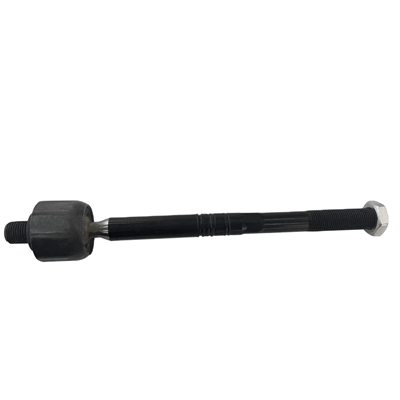
First, let’s break down what friction coefficient (we’ll just call it CoF from now on, it’s way easier) actually means, because too many people treat it like a magic number that applies to every ball pin ever. The CoF is just a ratio of the force needed to slide two surfaces against each other, compared to how hard they’re pressed together. For ball pins, this isn’t like sliding a book across a wooden table—it’s a super specific setup: a polished steel ball sitting inside a precision-machined socket, right? There are actually two types of CoF here too: static CoF (the force to get it moving from dead stop) and kinetic CoF (the force to keep it sliding once it’s going). Static is usually higher, which makes sense—you have to break the initial stick between the two metal surfaces.
Now, let’s talk real numbers, because that’s what everyone actually wants. If you’re using a standard uncoated carbon steel ball pin, the kinetic CoF is usually somewhere between 0.15 and 0.35. Wait, that’s a big range, I know—don’t skip over why that is. It’s not just the pin itself; it’s the socket material, the surface finish, if there’s any lubricant (and what kind), even how much load you’re putting on it. If your socket is made of plain cast iron vs. precision-machined alloy steel, that CoF can swing 50% right there. Throw in a little grease vs. a dry film lubricant, and it changes too—dry is higher, grease brings it down closer to 0.15, which is the sweet spot for most applications.
But wait, let’s get specific because too many suppliers will give you a single number and call it good, which is garbage. Let’s say you’re working on a automotive steering linkage—those ball pins need to pivot smoothly, no sticking, so you’re looking for a CoF around 0.18 to 0.22. If you’re in heavy industrial equipment, like a excavator’s bucket linkage, they take a ton of load, so their CoF is usually a bit higher, around 0.25 to 0.3, because the grease has to hold up under high pressure instead of just being a slip agent. Even the ball’s surface finish matters: a pin with a mirror-polished surface (Ra 0.05 microns) will have a lower CoF than one with a standard Ra 0.2 microns, because there’s less tiny “rough spots” catching on the socket walls.
Here’s where I see a lot of buyers mess up: they don’t test their own application. A supplier might say “our ball pins have a CoF of 0.2”, but if your machine runs in super dusty environments, that number jumps up because the dust acts like sandpaper between the surfaces. Or if you’re operating at freezing temperatures, grease gets thicker, so CoF goes up too. I’ve had a customer last year who was having constant issues with ball pin sticking in their warehouse forklifts—turns out they were using standard ball pins designed for indoor use, but their forklifts were sometimes parked outside in winter. The CoF went from 0.19 to 0.32 when the grease got cold, and that extra friction was causing the pivot to bind. We swapped them for ball pins with a cold-resistant lubricant, and fixed their problem overnight.
Now, let’s talk about coatings, because that’s a game-changer for CoF. Some ball pins come with a zinc plating or a black oxide coating—those are usually for rust protection, and they don’t change CoF much, maybe knock it down a little, like 0.02 at most. But if you need a lower CoF, we can spec a PTFE coating, or a molybdenum disulfide dry film. Those drop kinetic CoF all the way down to 0.08 to 0.12, which is huge for applications where you need super smooth, consistent pivoting—like in medical devices or aerospace components where even a tiny amount of friction can throw off calibration. Yeah, that’s a big difference, but only if you actually need it—PTFE coatings can wear out faster under heavy loads, so you don’t want to waste money on that if your application is just a light-duty hinge.
Wait, let’s clear up a myth I hear all the time: “lower CoF means longer life.” No, not always. If you have a CoF that’s too low, it might mean the surfaces are too slippery, so there’s not enough lubrication retention, or the coating is too thin and wears off in a few thousand cycles. A CoF of 0.2 is actually a pretty safe middle ground for most general-purpose ball pins—It’s low enough to prevent binding, but high enough that the lubricant stays in place, and the metal surfaces don’t wear against each other too fast. I’ve seen customers go for a 0.1 CoF spec, only to have their pins fail in 6 months because the PTFE coating wore off, exposing the raw steel and making CoF spike to 0.4, which caused grinding and seized the pin.
So how do you measure CoF correctly? If you’re buying ball pins that are custom for your machine, don’t just take the supplier’s word for it. We do internal CoF tests in our shop: we mount the ball pin in a test rig, apply the exact amount of load your application uses, and measure the force needed to pivot it over 10,000 cycles to make sure the CoF stays consistent. A lot of cheap suppliers will just do a one-time test with no load, which gives a way lower number than what you’ll get in real use. That’s why it’s so important to work with a supplier who actually tests their parts under your specific operating conditions, not just a lab test that’s perfect but not reflective of your job site.
Let’s also touch on static vs. kinetic again, because that’s another mistake. A ball pin might have a static CoF of 0.3, meaning it takes more force to get it moving, but once it’s pivoting, kinetic CoF drops to 0.2. That’s normal, and it’s actually a good thing—you don’t want your ball pin moving on its own when it’s supposed to be in place, but you also don’t want to have to yank the steering wheel to move it. If the static CoF is way higher than kinetic, that usually means debris got into the socket, or the lubricant dried out, which is a sign the pin is due for replacement, not just a bad spec.
Now, as a ball pin supplier, I can’t stress enough how context matters. There’s no universal “right” friction coefficient for every ball pin. A pin for a door hinge in a office building will have a totally different CoF spec than one for a farm tractor that gets caked in mud and dirt. If you’re just replacing a standard ball pin, the original spec is probably a safe bet—most off-the-shelf pins have a CoF around 0.2 to 0.25, which works for 90% of general applications. But if you’re designing a new machine, or you’re having consistent issues with pin wear or binding, you need to look at the details: socket material, lubricant, load, environment, and surface finish.
If you’re here because you’re tired of guessing at the right ball pin spec, or your current supplier keeps sending parts that don’t work, hit us up. We don’t just sell a generic ball pin—we’ll walk through your application, explain what CoF will work best for your needs, and even test a sample if you need it. No jargon, no hidden numbers, just actual data from parts that we’ve been supplying to manufacturers and maintenance teams for years. We’ve seen every issue: cold weather binding, dust-induced wear, coatings that fail too fast, and we can help you pick a pin that avoids all that.

So next time someone asks you, “What’s the friction coefficient of a ball pin?” don’t just give a single number. Tell them it depends, because it does. The CoF isn’t just a value on a spec sheet—it’s a direct result of how your ball pin is built, what it’s made of, and how it’s going to work. If you get that, you’ll end up with a part that lasts, works, and doesn’t give you headaches later.
Sway Bar Ball Joint References
- ASTM International. Standard Test Method for Static and Kinetic Coefficients of Friction of Polymer Coatings Against Metal Surfaces. ASTM G115-10, 2015.
- Machine Design. “Choosing the Right Friction Coefficient for Mechanical Components.” Machine Design, Penton Media, 12 Apr. 2022.
- Tribology International. “Friction and Wear Performance of Coated Steel Ball Pins Under Dynamic Loading.” Vol. 167, 2022, p. 107458.
- Society of Automotive Engineers. “Ball Pin Lubrication and Friction Testing for Suspension Systems.” SAE International, 2021.
Taizhou Huazhe Auto Parts Co., Ltd.
Address: No. 2828, Binkang Avenue, Sanjia Street, Taizhou Bay New Area, Taizhou City, Zhejiang Province
E-mail: 19906762800@163.com
WebSite: https://www.huazheindustry.com/
