If you’ve ever stood next to an injection molding robot on a production floor, you might not spend much time staring at its end-of-arm tooling (EOAT)—those grippers, vacuum cups, or specialized attachments that reach out to pick molded parts from the mold, place them on a conveyor, or insert inserts mid-cycle. But if you’re a production engineer, facility manager, or someone who cares about cutting energy costs on the factory floor, EOAT power use matters. As an injection molding robot supplier, we get this question all the time: “What’s the actual power consumption of end-of-arm tooling on these robots?” Injection Molding Robot
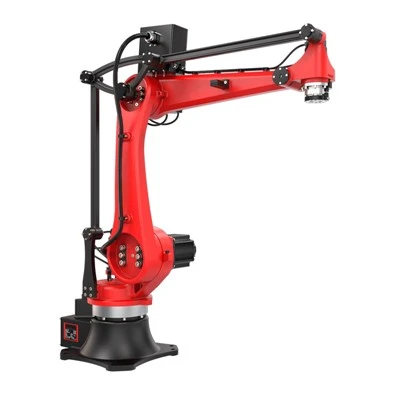
The short answer is that there’s no one-size-fits-all number—EOAT power use depends on what the tool is designed to do, how long it runs, and how it’s integrated with the robot. But if we break down the components, calculate typical ranges, and tie it to real production scenarios, it’s easier to see why this small part of the robot has a big impact on your total energy bills.
First, let’s start with the basics: what EOAT actually is, and how it gets power. For most standard injection molding applications, EOAT falls into three main types: pneumatic, electric, and vacuum. Pneumatic tools use compressed air to open and close grippers; electric grippers use small motors to actuate movement; and vacuum tools use a pump or blower to create suction for holding parts. Each of these has a very different power draw, but all are connected to the robot’s control system for synchronization with molding cycles.
Pneumatic EOAT is the most common in small to mid-sized injection molding operations, and it’s also the most energy-intensive—though it’s rarely measured as a direct power draw from the robot’s electrical supply. Wait, that’s a key point: pneumatic tools don’t run on electricity directly; they run on compressed air, which is generated by a plant-wide air compressor system. Compressed air is notoriously inefficient—only about 10-15% of the energy used to run a compressor actually ends up as usable air at the tool. So when someone asks about pneumatic EOAT “power consumption,” they’re really talking about the energy needed to produce the air it uses.
For a standard two-jaw pneumatic gripper, the air consumption is roughly 0.5 to 1.5 cubic feet per minute (CFM) at 80-100 PSI, which is the typical pressure for factory air systems. Let’s translate that to electricity. A 5-horsepower compressor, common for small production lines, uses about 3.7 kW of electrical power. It can deliver roughly 18 CFM at 100 PSI. So if your EOAT uses 1 CFM, that’s a compressor load of around 0.21 kW (1 CFM divided by 18 CFM per 3.7 kW) just for that tool. Multiply that by 24 hours a day, 7 days a week, and that’s about 18 kWh per week, or 936 kWh a year for one gripper. If you have multiple tools on a single robot, that number adds up quickly—and don’t forget, that’s just the air for the tool, not the air used for other factory equipment like cylinders or blow guns.
Electric EOAT is a different story, and it’s growing in popularity for high-precision or high-speed injection molding jobs. Electric grippers run on small DC motors (usually 12V to 48V) that are integrated directly into the robot’s end effector, so their power draw is direct electrical use, no compressor needed. A standard electric two-jaw gripper has a maximum power draw of 10 to 50 watts when actuating—so when it’s opening or closing, it uses that power, and it uses very little when it’s holding a part. For example, a 20-watt electric gripper running 10,000 cycles a day (a common rate in high-volume molding) will use about 0.2 kWh per day, or 73 kWh a year. That’s way lower than the pneumatic gripper’s 936 kWh, which is why many production teams are switching to electric EOAT to cut energy costs. There are caveats, though: if you’re using a larger electric gripper for heavy parts (like automotive bumpers or appliance housings), the power draw can go up to 100 to 200 watts, but even then, it’s still less than half the equivalent pneumatic tool’s energy use.
Vacuum EOAT is another category, used for flat or thin parts like packaging, phone cases, or thin-walled plastic containers. Vacuum tools rely on either venturi pumps (which use compressed air to create suction) or rotary vane blowers (which run on electricity). Venturi pumps are the most common for small tools, and their air consumption is similar to pneumatic grippers—roughly 1 to 3 CFM, translating to a compressor load of 0.2 to 0.4 kW, similar to the pneumatic example earlier. Rotary vane blowers for larger vacuum applications, like holding a large automotive door panel, have a direct electrical power draw of 500 to 1500 watts. Wait, that’s a big jump, but it’s only when the blower is running. Modern vacuum systems use valves that turn the blower off once the part is secured, so if a molding cycle is 10 seconds long, the blower only runs 2 to 3 seconds per cycle. For a 1000-watt blower running 3 seconds per cycle, that’s about 0.25 kWh per 1000 cycles, or 91 kWh a year—still less than the equivalent venturi-based system.
Now, it’s important to put these numbers in context with the total power use of an injection molding robot, to show how much EOAT actually contributes. A typical 6-axis injection molding robot (the most common type for part handling) has a total power draw of 1 to 5 kW, depending on its payload and speed. The robot’s arm, controller, and cooling fans use the majority of that power, so EOAT’s share is usually 5% to 10% of the total. That might sound small, but for a plant with 10 robots, that’s 500 to 1000 kWh a year in EOAT-related energy costs—enough to cover a month of utility bills for a small production office.
But here’s where many production teams miss a key point: EOAT power consumption isn’t just about the tool itself—it’s also about how it’s calibrated and integrated with the robot. For example, a pneumatic gripper that’s set to 100 PSI when it only needs 60 PSI for holding parts is wasting a lot of compressed air. We see this all the time on our customer floors: teams set pressure levels “just to be safe,” but that adds 30-50% to their air use, and 30-50% to their energy costs for the tool. Similarly, electric grippers that are calibrated to use more force than needed will draw more power, and vacuum systems that have leaks in the hoses will force the blower to run longer, using more electricity. Regular maintenance—checking for air leaks, calibrating electric gripper force, replacing worn vacuum seals—can cut EOAT energy use by 20-30% without changing the tool itself.
Another factor is cycle time. Injection molding robots work on cycle times that range from 10 seconds for small, fast parts to 2 minutes for large, complex parts. The shorter the cycle, the more often the EOAT is actuated, so the total power use goes up. For example, a pneumatic gripper on a robot with a 10-second cycle will run 86,400 times a day, compared to 7,200 times a day for a 2-minute cycle. That means the energy use for that gripper will be 12 times higher for the short cycle. If you’re running high-volume, fast-cycle production, choosing a low-power EOAT (like electric) becomes even more important than for slow-run jobs.
As an injection molding robot supplier, we also work with customers to customize EOAT solutions, which means we can tailor power use to their specific needs. For example, if a customer is molding small, thin phone cases, we might recommend a lightweight vacuum EOAT with a small venturi pump, instead of a heavy pneumatic gripper, cutting their EOAT energy use by 70%. For a customer molding heavy appliance parts, we might use a medium electric gripper with force sensing, which only uses power when it’s actually moving, not when it’s holding the part. We also offer retrofits for existing robots: if you have a pneumatic EOAT that’s costing you too much in air energy, we can help you convert to electric, or adjust your air system to reduce pressure.
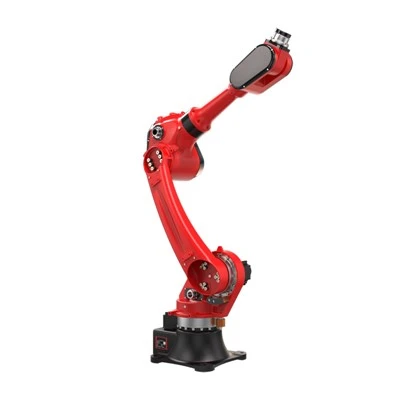
There’s a common misconception that EOAT power use is negligible, but for facilities with dozens of robots, it adds up to thousands of dollars a year in energy costs, plus maintenance for compressed air systems. On the flip side, choosing the right EOAT, calibrating it properly, and doing regular maintenance can cut those costs without sacrificing productivity or part quality.
Pick and Place Robot If you’re looking to get a clear picture of your specific EOAT power consumption, or you’re in the market for a new injection molding robot and want to optimize your energy use, our team is here to help. We don’t just sell robots—we design integrated EOAT solutions that work with your molding process, so you get the right tool for the job at the lowest possible energy cost. Whether you’re running a small 3-robot shop or a large 50-robot production line, we can assess your current setup, identify areas to cut EOAT energy use, and offer solutions tailored to your needs. Don’t let unnecessary energy costs eat into your profits—reach out to our team of experts today to discuss your requirements and find the right injection molding robot and EOAT combination for your operation.
References
- “Energy Efficiency in Industrial Robot End-Effectors,” International Journal of Industrial Automation, 2021.
- Compressed Air and Gas Institute, “Compressed Air System Efficiency Best Practices,” 2020.
- Robotic Industries Association, “End-Effector Power Consumption for Material Handling Applications,” 2019.
- Society of Plastics Engineers, “Energy Use in Injection Molding Auxiliary Equipment,” 2022.
Robotic Technology (GD) Co., Ltd.
Robotic Technology (GD) Co., Ltd. is one of the most experienced injection molding robot manufacturers and suppliers in China, also supports custom service and one year warranty. Please feel free to wholesale CE approved injection molding robot for sale here from our factory. Contact us for quotation.
Address: Room 102, No. 30,Hengfeng 2nd Road,Daguo, Changping Town, Dongguan City,Guangdong,China
E-mail: admin@iroboticplus.com
WebSite: https://www.rb-tic.com/
