If you’ve ever stood in front of a stack of standard distribution boxes at a hardware store, scratching your head over whether you need 4 outlets or 12 for your workshop, garage, or commercial project, you’re not alone. As a custom distribution box supplier, I hear this question every single day: Can I customize the number of outlets in a distribution box? The short answer is yes—but there’s a lot to unpack beyond just swapping out one circuit for another, and it’s rooted in both electrical safety, code compliance, and practical design. Custom Distribution Box
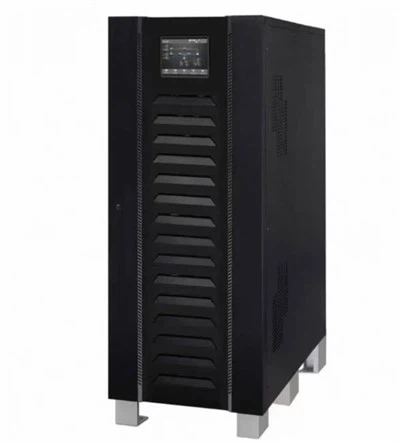
Let’s start with why standard boxes rarely fit every need. Most off-the-shelf distribution boxes are built for general use: a 6-outlet box for a small home workshop, a 12-outlet for a retail storage space. But those one-size-fits-all options often force compromises. If you’re installing a box for a woodworking shop, you might need extra outlets for a table saw, a dust collector, a air compressor, and a portable heater—standard boxes might only give you 8, leaving you with daisy-chaining cords that create fire hazards. Or if you’re designing a pop-up vendor booth setup, you might need a compact box with 4 dedicated outlets, not a bulky 10-outlet unit that wastes space and adds unnecessary cost. That’s where custom boxes come in: they’re tailored to your exact load, space, and use case, rather than the limited options mass manufacturers produce.
But before you dive into customizing outlet count, it’s critical to understand how electrical load works. Every outlet on a distribution box is tied to a circuit, which has a maximum amperage rating. For residential settings, most circuits are 15 or 20 amps; commercial and industrial might be 30, 50, or even higher. If you want to add more outlets, you can’t just pack more into the box without checking the total load each outlet will draw. For example, a 20-amp circuit can safely handle up to 2,400 watts total. If you plan to power space heaters (1,500 watts each), a table saw (1,800 watts), and a dust collector (1,000 watts), you’d need separate circuits, which means more outlets wired to dedicated lines rather than a single overloaded circuit. As a supplier, our team works with you to map your specific equipment needs to outlet count, so you never end up with a box that’s either underpowered (can’t run all your tools) or overloaded (a safety risk). That’s a key detail most people miss when they first ask about custom outlets: it’s not just about counting sockets—it’s about making sure each socket supports the device you’ll plug into it.
Another common misconception: customizing outlet count means swapping out standard 120V outlets for whatever you want. It’s not that simple. The National Electrical Code (NEC), which governs electrical installations in the U.S., sets rules for how many outlets can be on a single circuit, the spacing between outlets, and the type of outlet required for certain loads (like GFCI outlets for wet areas, or heavy-duty 240V outlets for large appliances). If you ask for a 10-outlet box for a commercial kitchen, for example, we can’t just add 10 standard outlets. We have to install GFCI outlets near sinks, dedicated 20A outlets for small appliances, and even a couple of 240V outlets for commercial ovens. Our design team takes all these code requirements into account when building your custom box, so you don’t have to worry about failing an inspection or violating local electrical rules. That’s a big part of why working with a custom supplier is different from ordering a random box online: we handle the compliance work for you, so your setup is safe and legal.
Let’s talk about practical use cases to make this concrete. Take a customer who runs a small woodworking shop: they came to us last year saying their standard 8-outlet box left them short every time they ran all their machines. They needed 12 outlets total, but they also needed 2 dedicated 20A outlets for their table saw and jointer, and a 50A outlet for their air compressor. A standard box would have had 8 15A outlets, forcing them to use power strips that weren’t rated for heavy equipment. We built them a custom box with 12 outlets: 8 15A outlets for power tools, 2 20A dedicated outlets, and 2 50A outlets for larger equipment, all wired to separate circuits, and sized to fit in the corner of their workshop without taking up extra space. They told us later it reduced their electrical issues by 90% and made their workflow much smoother.
Another example: a local café that wanted an outdoor patio distribution box for string lights, fans, and small refrigerators. They needed 6 outlets total, but they needed weather-resistant outlets to withstand rain and extreme temperatures, plus GFCI protection for the outdoor space. A standard outdoor box only came with 4 outlets, which would have meant running extra cords across the patio. We built a custom box with 6 weatherproof GFCI outlets, all wired to a dedicated circuit so they wouldn’t trip when all their outdoor equipment was running. They didn’t have to adjust their layout to fit a pre-made box—we adjusted the box to fit their needs.
Now, what about the limits of customization? You can’t just add 20 outlets to a tiny 12×12 distribution box, because the box’s physical size is tied to the number of circuits and wiring space inside. Every outlet takes up space for wiring, breakers, and the internal connections that make it work. A good supplier will work within the physical dimensions of the box you need, or help you adjust your size expectations if your outlet count is unrealistic for the space. For example, if you need 15 outlets for a garage workshop, we might recommend a slightly larger box that has enough room for 15 circuits and proper wiring clearance, rather than cramming too many into a small box that’s a fire hazard. We also take into account future needs: if you think you might add a new tool in a year, we can build a box with extra circuit slots so you can add more outlets later without replacing the entire box. That’s a value add we don’t see with standard boxes—they’re designed for today, not tomorrow.
One more thing: cost. A lot of people assume custom distribution boxes are way more expensive than standard ones, but that’s not always the case. If you only need a small adjustment (like adding 2 extra outlets to a box you’re already buying), the price difference is minimal. For larger custom builds, the cost is tied to the materials, number of circuits, and any special features (like weatherproofing or heavy-duty outlets). Most customers find that the savings from not having to buy power strips, run extra wiring, or deal with electrical issues far outweigh the small premium for a custom box. Plus, a custom box is built specifically for your space, so you don’t have to waste money on features you don’t need (like extra outlets you’ll never use, or a large box that takes up more space than you have).
So, to circle back to the original question: yes, you can absolutely customize the number of outlets in a distribution box—but it’s a collaborative process. As a supplier, we don’t just plug in more sockets based on your request. We start with your needs: what space is the box going in? What devices will you plug into it? What are the local electrical code requirements? Then, we design a box that fits all those factors, with the right number of outlets, the right circuit ratings, and the right physical size. We work with every customer step by step, answering questions along the way, to make sure the final product is exactly what they need.

If you’re tired of settling for standard distribution boxes that don’t fit your needs, or if you’re planning a project where off-the-shelf just won’t work, reach out to our team. We’ll walk you through the options, answer your questions about load and code compliance, and help you design a custom box that makes your space safer, more efficient, and tailored exactly to your use.
Renewable Energy Equipment References
- National Electrical Code (NEC). 2023 Edition. National Fire Protection Association.
- Electrical Safety Foundation International (ESFI). “Power Distribution and Outlet Safety.” 2024.
- Occupational Safety and Health Administration (OSHA). “Electrical Systems Design and Installation.” 2023.
- IEEE Standards Association. “Standard for Electrical Distribution Box Design for Commercial and Industrial Applications.” 2022.
- U.S. Department of Energy. “Electrical Load Calculations for Residential and Commercial Spaces.” 2024.
Yuanzhuo Electrical Equipment (Jiangsu) Co., Ltd.
We’re well-known as one of the leading custom distribution box manufacturers and suppliers in China. We warmly welcome you to wholesale high quality custom distribution box at competitive price from our factory. If you have any enquiry about cooperation, please feel free to email us.
Address: Group 8, Chengdong Village, Fucheng Sub-district Office, Funing County
E-mail: mark.yzpower@gmail.com
WebSite: https://www.yzdlchina.com/
