If you’ve ever wondered how elevators keep running smoothly, no matter how many people pile in or sudden power surges hit, there’s a tiny but critical part making it all work: the elevator PCB. As a PCB supplier that’s worked on these systems for years, I get asked all the time how these boards stand up to over-current and over-voltage—two of the biggest threats to elevator electronics. Let’s break this down like we’re chatting over a coffee, no super technical jargon (promise). Elevator Pcb
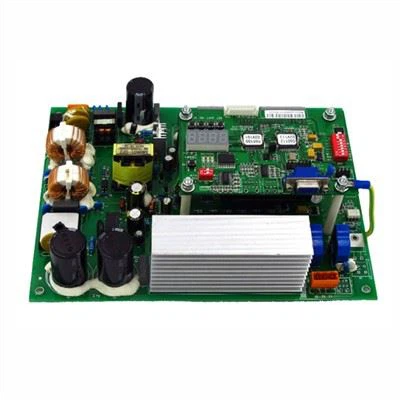
First, let’s get what we’re actually dealing with. Over-voltage is when the power feeding the elevator jumps higher than it should—like if the building’s grid has a blip, or a faulty transformer sends too much juice. Over-current is when the system draws more electricity than its circuits can handle—think a full elevator car lurching upward, making the motor work way harder than normal. Both are fast-acting, so the PCB’s protection can’t wait around; it has to kick in before a tiny spark turns into a fried board or a stuck elevator.
Let’s start with over-voltage protection because that’s the first line of defense we build into every elevator PCB. Most of the time, we use something called a Metal Oxide Varistor, or MOV for short. Here’s the trick: an MOV acts like a normal resistor until the voltage crosses its set threshold. If that surge hits, it instantly drops its resistance to near zero, siphoning all the extra voltage away from the sensitive microchips and motors on the board. As soon as the voltage levels back down to safe, the MOV goes back to normal. We size these MOVs specifically for elevators, too—like, a residential elevator’s MOV is different from a 20-story commercial one, because their power needs are totally different. I’ve seen what happens if you use the wrong size: one client tried to save a buck with a generic MOV, and a lightning strike fried their entire elevator PCB in half a second. Never again for that guy.
Another key over-voltage guard is a reverse biased diode, usually a Zener diode. Wait, let’s keep this simple: a Zener diode only conducts electricity when it hits its exact voltage rating. If the power is too high, it lets the extra energy bleed off to ground instead of letting it push through the board’s circuits. We pair Zener diodes with MOVs sometimes for extra coverage—MOVs handle big surges, Zener diodes handle smaller, more frequent blips. It’s like having a bouncer at a club: the big tough guy (MOV) deals with the rowdy drunks, and the smaller one (Zener) handles the casual people who try to cut the line.
Now for over-current, which is all about stopping too much electricity from flowing through the PCB’s traces. The most common part here is a fuse, but not the old glass ones you’d swap out at home. We use resettable fuses, also called PTC (Positive Temperature Coefficient) thermistors. Here’s how that works: if current spikes, the PTC heats up super fast, and its resistance shoots through the roof—so it stops the current dead in its tracks. Then, when the power cools down a little, it resets on its own, no need to yank out a broken fuse. That’s perfect for elevators, because nobody wants a maintenance guy climbing up the shaft every time a surge hits. We add regular fast-acting fuses too as a backup, just in case the PTC fails for some reason—layered protection, that’s our thing.
Wait, there’s another over-current trick we use, especially for the elevator’s motor circuits: current sensing. We add a tiny resistor (called a shunt resistor) that’s super precise. It measures how much current is flowing every millisecond. If it sees current go over the board’s limit, it sends a signal to the PCB’s microcontroller, which triggers the protection systems—like cutting power to the motor temporarily. That’s way faster than waiting for a fuse to blow. I remember a client whose elevator kept tripping for no reason; turns out their old PCB didn’t have current sensing, so the motor was drawing a little too much power every time it stopped and started, and it was slowly wearing out the circuit. We swapped in a new board with the shunt resistor, and the problem was gone within a week.
But here’s the thing—elevators don’t live in a perfect environment. They’re in busy buildings, exposed to temperature swings, dust, sometimes even moisture. So our protection systems can’t just be on the schematic; they have to be built to last, too. We test every single elevator PCB for over-current and over-voltage by applying way more stress than it would ever see in real life—like 2x the normal voltage, 3x the normal current, for extended periods. If it doesn’t fail, it passes. I’ve tested a batch of PCBs that didn’t make the cut once—their MOVs burned out way too fast when we hit them with repeated small surges. We sent them back and swapped in higher-grade varistors, and that problem never came back.
Another thing most people don’t think about: ground fault protection. If there’s a short circuit somewhere, it can send a huge current spike through the PCB. We add ground fault circuit interrupters (GFCIs) specifically calibrated for elevator systems. They shut off power in less than a millisecond if they detect a current leak to ground, which protects both the PCB and the people inside. It’s a safety thing, but it ties right into over-current protection too—if a short causes a surge, the GFCI catches it before anything breaks.
I’ve worked with elevator companies for 8 years now, and the number one complaint I hear about old PCBs is that they “just stop working” when there’s a power blip. That’s almost always because the over-current and over-voltage protection was either cheap or poorly designed. When we build an elevator PCB, we don’t just add parts—we match them to the specific elevator’s size, usage, and the building’s power grid. A hospital elevator, for example, needs way more robust protection than a residential one, because you can’t have a medical elevator stuck mid-floor with a patient. We adjust the MOV voltage, PTC rating, and even the shunt resistor size to fit.
So what does that mean for you if you’re an elevator maintenance manager or someone looking to upgrade your system? It means you don’t have to guess. A good elevator PCB’s over-current and over-voltage protection is invisible when it’s working right—you only notice it when it works. If your elevator trips often, or you’re replacing PCBs every couple years because of surge damage, it’s probably time to switch to a supplier that builds their boards with layered, tested protection.

We don’t do generic PCBs here. Every board we make is tailored to your elevator’s needs, so you don’t have to worry about surges or overloads turning your lift into a hassle. If you’re looking to upgrade your current PCBs, source new ones for a build, or just have questions about how we handle over-current and over-voltage protection, reach out to our team to chat through your specific needs. We’re here to make sure your elevators run safely, no matter what the grid throws at them.
Elevator Overspeed Governor References
- "Overvoltage Protection for Electronic Circuits" – IEEE Standards Association
- "Elevator Control Systems and Safety" – National Elevator Industry, Inc.
- "Resettable Fuses for Overcurrent Protection" – Littelfuse Application Note
- "Metal Oxide Varistors (MOVs) Selection Guide" – TE Connectivity Technical Documentation
Sanjin Elevator Parts Co., Ltd.
Sanjin Elevator Parts Co., Ltd. is one of the most professional elevator pcb manufacturers and suppliers in China, featured by quality products and good service. Please rest assured to buy or wholesale high-grade elevator pcb at competitive price from our factory.
Address: 18th Floor, Xinyuan Center, Fenghe Road, Xi’an, Shaanxi, China
E-mail: elevatorparts@westdt.com
WebSite: https://www.sanjinelevator.com/
