If you’ve ever found yourself squinting at a screen while your ceiling lights are too low to illuminate your counter evenly, or walking away from a commercial space where LED panels are either blinding workers or leaving half the room in shadow, you’ve probably wondered: what’s the right height to hang these things? As an LED panel light supplier who’s fielded this question in client calls, trade show chats, and even random conversations at coffee shops over the last seven years, I’ll tell you straight up—it’s not a one-size-fits-all number. It depends on way more than just how high your ceiling is, and getting it wrong doesn’t just make your space look off—it wastes the very energy LED panels are supposed to save. LED Panel Light
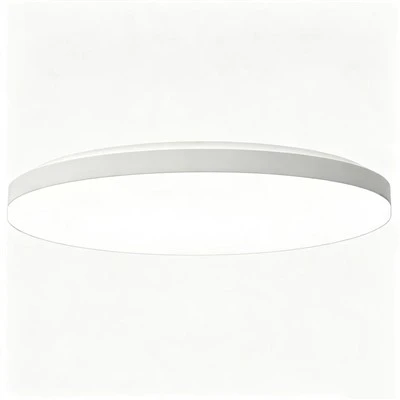
Let’s start with the basics: why height matters more for LED panels than, say, incandescent bulbs or even recessed cans. LED panels are flat, diffused light sources, not the point-source kind that cast harsh, tight beams. Their whole job is to spread light evenly across a surface, whether that’s a kitchen counter, an office desk, or a retail display wall. If you hang them too low, the light gets super concentrated in a small area directly below, and the edges of the room end up dim. Hang them too high, and you’re essentially shining a wide light at a ceiling that’s too far away, so most of the light bounces around uselessly, and you get that washed-out, gray gloom that makes people want to put on sunglasses inside. I’ve seen this happen to both small businesses and big-box stores, and it always leads to frustrated owners calling us for a fix. A common mistake? Clients will buy a 2×4 LED panel thinking it’s the same as a fluorescent troffer they used before, and just swap it without adjusting height—end result: uneven light and a bunch of returns.
Now, let’s get into the actual science that drives the minimum installation height. First, we need to talk about beam angle, because that’s the biggest factor here. Most standard LED panel lights for commercial and residential use have a beam angle of 120 degrees. That means the light spreads out 120 degrees from the center of the panel, forming a big circle of illumination below it. The key here is that the edge of that illumination circle needs to reach at least the midpoint between adjacent panels, right? Because if you have multiple panels side by side, their light has to overlap enough so there’s no dark gap between them.
Let’s do the quick math for context. If you have a single panel with a 120-degree beam angle, installed at height H, the width of the light circle it casts on the floor below is calculated by trigonometry: the width equals 2 times H times the tangent of (beam angle divided by 2). For a 120-degree beam, half the angle is 60 degrees, and tan(60) is roughly 1.732. So that means width = 2 * H * 1.732 = ~3.464 * H. Got that? Now, for most spaces, we want that circle of light to cover 90% or more of the space below, no dark spots. So if your panel is 2 feet wide (a common 2×2 panel), you don’t want the light circle to be so tight that it only covers 2 feet—you want it to spread enough to cover, say, 3 feet, so when you put panels next to each other, their light meets halfway and no gaps form.
Wait, but what’s the minimum here? The rule of thumb we give our clients is: the minimum installation height for a standard 120-degree beam LED panel is 1.5 times the diagonal of the panel. Let’s test that. A 2×2 panel has a diagonal of about 2.83 feet, so 1.5 times that is ~4.25 feet. For a 2×4 panel, diagonal is ~4.47 feet, so minimum height is ~6.7 feet. For small under-cabinet LED panels, which have a narrower 90-degree beam, the minimum height is lower—about 1 foot, since those are meant to hang 12 to 18 inches above a kitchen counter. But wait, that’s just the baseline for residential or low-bay commercial spaces, right? What about higher ceilings? Like 10, 15, even 20 foot ceilings in warehouses or big retail stores? The minimum starts going up, obviously, but there’s another factor here: glare.
Glare is a big one. LED panels are bright, even diffused ones, and if you look directly at a panel from below, at too short a distance, you’ll get that harsh, eye-straining glare that gives people headaches after an hour of sitting under it. That’s especially bad in office spaces, where workers stare at desks all day, or in classrooms, where kids are sitting up front. The glare threshold for most workspaces is defined by something called the Unified Glare Rating (UGR), which is a measure of how uncomfortable a light source is to the human eye. For offices, we want UGR to be 19 or lower; for classrooms, it’s 16. If your LED panel is too low, the UGR jumps way above that threshold. For a standard 4000K cool-white LED panel (the most common type for commercial use), the minimum height to keep UGR under 19 is about 8 feet for a 2×4 panel, which lines up with our earlier math. If you go lower than that, even a diffused panel will feel bright enough to make you squint after a while.
I should also mention that not all LED panels are created equal. We offer panels with different beam angles—some narrow 60-degree beams for accent lighting, some wide 150-degree beams for open spaces. If you’re using a narrow beam, your minimum height has to be higher, because the light is more concentrated; if you’re using a 150-degree wide beam, you can hang them a little lower, since the light spreads more. For example, a narrow 60-degree beam 2×2 panel has a minimum height of about 5 feet, while a 150-degree beam same-size panel can hang at 3.5 feet without glare or dark spots. That’s why it’s important to match the beam angle to your space, not just grab whatever panel is cheapest.
Let’s talk about real-world examples, because that’s what clients care about. Last year, we had a small café client who bought 10 2×2 LED panels for their 10-foot ceiling. They hung them at 7 feet, following our general rule, and immediately noticed that the tables near the walls were dim, and the bar area was too bright. They called us panicking, thinking they got bad panels, but it was just height. We adjusted them to 8.5 feet, and the light spread evenly across the whole space, no dark spots, no glare. Another client: a 15,000 square foot warehouse with 20-foot ceilings. They initially hung their 2×4 panels at 12 feet, which was too low—glare was so bad workers complained they couldn’t read inventory labels. We recommended they use our 150-degree beam panels and adjust to 15 feet, which brought the UGR down to 18, perfect for warehouse work, and the light covered every corner of the 20-foot high space. That’s a common mix-up—applying a residential height rule to a commercial space with high ceilings.
What about residential spaces? I get a lot of calls from homeowners wanting LED panels for their living rooms or garages. The minimum height there is lower, obviously—for a living room with 9-foot ceilings, hanging a 2×2 panel at 6 to 7 feet works, no glare, even light. For a garage with 10-foot ceilings, you can hang them at 7.5 feet. The mistake homeowners make is hanging them too low over a kitchen island—they’ll see that a pendant light works at 30 inches above the island and think LED panels do the same. No way—panels are much bigger, so hanging a 2×2 panel 3 feet above a 4-foot island will leave the edges of the island dim and cause glare when you’re working over the stove. We always tell residential clients: for kitchen islands, keep LED panels at least 4.5 feet above the counter.
There’s also a factor we call “maintenance clearance.” If you’re hanging panels in a drop ceiling, you need to make sure there’s enough space above the ceiling to replace the panel later, right? Most drop ceilings have a vent or plenum above, so the actual installation height (measured from the floor to the bottom of the panel) might be a few inches lower than the ceiling height, and you have to account for that. I had a client who installed panels flush with their 8-foot drop ceiling, only to realize later that they could barely reach them to change a bulb—so they had to lower them a foot, which fixed the access issue and improved the light spread. That’s a small detail, but it’s one we bring up to every client, because no one wants to have to climb a ladder every time their LED panel dies.
Wait, let’s address a common myth I hear all the time: the higher the panel, the better. No, that’s not true. If you hang a panel too high, you’re wasting energy. LED panels are efficient, but their light is only useful if it reaches the space you’re illuminating. If you hang a 2×4 panel with a 120-degree beam at 10 feet, instead of the minimum 6.7 feet, the light circle will be over 34 feet wide—way bigger than your space. Most of that light will be bouncing off the ceiling, not hitting your desks or floors. That’s a waste of electricity, and it also means you might need more panels than you thought, because the light is so spread out. We once had a client who hung their panels at 18 feet in a 20-foot high retail space, and they ended up needing twice as many panels to get the same light level as if they’d hung them at 12 feet. So higher isn’t better—it’s just more expensive.
Now, let’s wrap this up with actionable tips, because I know you don’t just want science—you want something you can use. First, measure your space: ceiling height, the size of the area you need to illuminate, and the width of your panels. Then, match the beam angle: if you have low ceilings (8 to 10 feet), go for a 120-degree or 150-degree wide beam. For high ceilings (12 feet and up), stick to 120-degree beams to avoid light waste. Second, calculate the minimum height using the rule we use at our company: 1.5 times the diagonal of your panel, adjusted for beam angle. If you have a narrow beam, add 1 foot to that number; if wide, subtract 0.5 feet. Third, test it. If you’re unsure, get a temporary panel and hang it at your estimated height for a day—walk around the space, look for dark spots near walls or between panels, and see if it’s comfortable to look at without squinting. Finally, don’t forget maintenance clearance—leave at least 6 inches above the panel if it’s in a drop ceiling, so you can pull it out for replacement.
At the end of the day, LED panel lights are a smart investment, but only if you install them correctly. Too low, and you get glare and dark spots; too high, and you waste energy and money. As an LED panel light supplier, I’m not just here to sell you panels—I’m here to make sure they work for your space, which is why I spend so much time walking clients through height calculations, beam angles, and all the little details that make a good lighting setup great. If you’re planning an upgrade for your office, retail space, or home and want to get the height right the first time, feel free to reach out to discuss your project needs.
LED Downlight References:
- International Energy Agency. (2021). LED Lighting Technology Roadmap: Energy Efficiency and CO2 Reductions.
- Illuminating Engineering Society. (2020). Lighting Handbook: Application and Design (10th ed.).
- National Electrical Manufacturers Association. (2019. LED Panel Light Performance Specifications.
- US Department of Energy. (2022). Commercial Lighting Guide: LED Systems Design and Installation.
- Unified Glare Rating: Method for Calculating Discomfort Glare in Interior Lighting. (2018). ISO Standard 16800.
Debesen (Shanghai) Optoelectronics Technology Co., Ltd.
We are one of the most professional led panel light manufacturers and suppliers in China, featured by quality products and good service. Please rest assured to wholesale advanced led panel light in stock here and get quotation from our factory. We also accept customized orders.
Address: No.258 Xiucheng Road, Fengcheng Town Economic Development Zone, Fengxian District, Shanghai
E-mail: Debesen258wendy@163.com
WebSite: https://www.debesen.com/
