If you’ve ever worked with hydroponics, aquariums, or soil-based crop production, you’ve probably stared at an EC meter screen, waiting for that little number to stop jumping. You’re not alone— I get texts from hydroponic farmers all the time panicking because their meter is acting weird: one minute it’s 1.2 mS/cm, the next it’s 1.4, and they’re convinced their nutrient mix is broken. As someone who’s been selling and supporting EC meters for over 8 years, I can tell you this is one of the most common questions I get: how long do you actually need to wait for a stable EC reading? Spoiler: it’s not 10 seconds, and it’s not 5 minutes— it depends on a few key things, and I’ll break all of that down for you straight. EC Meter
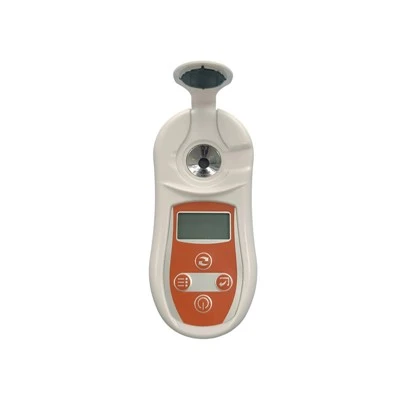
First, let’s get the basics out of the way for anyone who’s new here. EC stands for Electrical Conductivity, right? It measures how well water carries an electrical current, which directly ties to how many dissolved salts, nutrients, or contaminants are in that water. A stable reading isn’t just a “nice to have” — if you get a shaky number, you’ll either over-fertilize (which burns your plants, wastes money, and pollutes runoff) or under-fertilize (which stunts growth). I’ve seen a guy lose his entire 100-plant basil crop because he checked his meter 10 seconds after dipping it and adjusted his nutrients wrong. So patience here matters, but not for no reason.
Now, back to the wait time. The short answer: most good EC meters will give a stable, accurate reading between 30 seconds and 2 minutes, max. But here’s the catch— that’s only if you’re doing it right. A lot of people mess up the dipping step, which makes the reading take forever (or never actually stabilize). Let’s walk through the variables that change this timeline, because if you’re waiting longer than that, it’s not the meter’s fault usually.
First variable: the type of meter you’re using. Not all EC meters are created equal. The cheap, $10 ones you find on Amazon? Those are usually for rough estimates, not precise readings. I’ve tested a dozen of those— they take 3 to 5 minutes just to stop flickering, and even then, they’re off by 15-20% compared to lab-grade meters. On the other end, our mid-tier meters (the ones most growers, aquarists, and small commercial farms use) are calibrated to be pretty quick. Dip them correctly, and they stabilize in 45 to 60 seconds tops. Our premium industrial meters? We’ve gotten readings as fast as 25 seconds, and they hold steady for hours— but those are for big operations where every mL of nutrient counts. I always tell people: if your meter takes more than 2 minutes to stabilize, you might want to check its calibration. Most meters need to be calibrated with a 1.413 mS/cm solution every 1 to 3 months, depending on how often you use it. If it’s out of calibration, it’ll never give a real stable number, no matter how long you wait.
Second variable: what you’re testing. The sample you’re measuring makes a huge difference. Let’s say you’re testing a clear, hydroponic nutrient solution— that’s easy, the ions move quickly, so the meter can “sense” the EC fast. But if you’re testing something murky, like potting soil extract, or a tap water with lots of dissolved solids, or even saltwater for a reef tank? That’s different. Soil extracts, for example, have ions that are bound to soil particles first, so they need a minute to leach into the water you’re using to make the extract. I recommend letting your soil extract sit for 2 minutes before dipping the meter, then waiting another 30 seconds after dipping for the reading to stabilize. I once had a guy test his straight soil, not the extract, and waited 5 minutes and still had a flickering number— he was doing it wrong, not the meter. Another example: reverse osmosis water. RO water has almost zero ions, so the meter will take a second longer because there’s very little electrical current to pick up. It’ll still stabilize, but give it 90 seconds instead of 45, just to be safe.
Third variable: how you dip and handle the meter. This is where 90% of the mistake happens. A lot of people just dip the probe once, yank it out, dip it again, and repeat— that’s wrong. The probe has to be fully submerged, and you have to gently swirl it a few times to get rid of any air bubbles on the surface. Air bubbles act like insulators, so if there’s a bubble on the probe, the reading will jump. Also, don’t hold the meter by the cord while it’s in the solution— your body has electrolytes (sweat, even if you can’t feel it) and that will skew the reading. A trick I teach all our customers: after dipping, swirl the probe 2 or 3 times gently, set it down on the edge of your bucket (not in the middle where it might bump the bottom), and just leave it be. No moving it, no tapping it. If you do that, you’ll get a stable reading every time in 45 seconds to a minute. I’ve seen people tap the meter on the bucket 10 times while it’s waiting, and that makes the reading flicker nonstop because it’s causing tiny waves that mess with the probe’s contact.
Now, what about when a reading is actually stable? You’ll know it when you see it. The numbers stop changing, right? Like, it might go from 1.12 to 1.13, then back to 1.12, then sit there for 5 or 10 seconds. That’s stable. If it’s bouncing between 1.0 and 1.5, or changing every 2 seconds? That’s not a real reading, and you need to fix your technique or your meter’s calibration.
Let’s talk about common myths I hear all the time. First myth: “You need to wait 5 minutes every time, no exceptions.” That’s garbage for most use cases. If you’re using a good, calibrated meter in a clear solution, 1 minute is more than enough. Second myth: “Rinsing the probe between samples isn’t important.” No, it is. If you test a 2.0 mS/cm nutrient mix and then dip the probe right into a 1.0 mS/cm mix without rinsing, the leftover solution on the probe will contaminate the new sample, and the reading will be wrong. How to rinse? Distilled water, a quick dip, and a paper towel to pat dry— don’t wipe the probe, that can scratch the coating on it, which ruins accuracy. Third myth: “Higher EC solutions take longer to stabilize.” Nope, not really. A 3.0 mS/cm hydroponic solution will stabilize in the same time as a 1.0 mS/cm one, as long as the sample is clear and no bubbles. The only time higher EC is an issue is if it’s a super concentrated sample (like straight fertilizer) — you need to dilute that first, and then the diluted sample will stabilize quickly.
Wait, let’s throw in a real example from a customer of mine. Last summer, a small-scale tomato grower was having major issues. His meter would never stabilize, so he kept adjusting his nutrients every few minutes, and his plants were wilting. He called me panicking, said he’d waited 10 minutes before checking and still had a flickering number. I asked him how he was doing it, and he said he dipped the probe once, lifted it out to look at it, dipped again, and repeated. That’s the mistake. I walked him through the swirl and leave-it-alone method, and he got a stable 2.1 mS/cm in 50 seconds. Turns out he’d been adjusting his nutrients when the reading was just flickering from his own movements, not the actual solution. He saved his crop, and still sends me tomatoes every summer (thanks, John!).
Another example: a reef aquarist. He was testing his saltwater mix for his clownfish tank, and his cheap meter was taking 4 minutes to stabilize. He switched to one of our mid-tier meters, and now it’s stable in 45 seconds. He told me the faster reading helped him keep his salt levels consistent, which his fish loved. That’s the difference between a good meter and a cheap one.
Now, what if you’ve done everything right— calibrated the meter, swirled the probe, waited a minute— and it’s still not stabilizing? Let’s troubleshoot. First, check for air bubbles. If you look at the probe under a bright light, do you see tiny bubbles stuck to it? If yes, gently tap the side of the bucket to dislodge them, or swirl the probe again. Second, check if the solution is dirty. If your nutrient solution has floating sediment or algae, that can stick to the probe and mess with the reading. Filter your solution every week, or change it out every 2 weeks, and that should fix it. Third, check if the probe is worn out. Most EC probes last 1 to 2 years, depending on use. If you’ve had yours longer than that, it might be time to replace the probe instead of the whole meter— probes are usually cheaper than buying a new meter.
So, to wrap this all up, here’s your step-by-step for a stable EC reading every time:
- Calibrate your meter with a 1.413 mS/cm solution every 1-3 months.
- Rinse the probe with distilled water and pat dry before use.
- Fully submerge the probe in your sample, swirl gently 2 times to remove bubbles.
- Set the meter down, don’t move or tap it.
- Wait 30 seconds to 2 minutes (depending on sample type) until the numbers stop changing. That’s your stable reading.
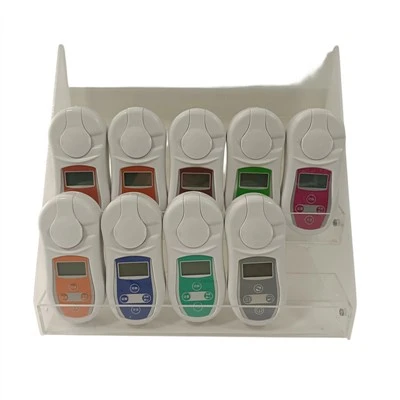
If you’re tired of waiting forever for unstable readings, or your current meter just isn’t giving you the precision you need, we’ve got options for every use case— from small home hydroponic setups to large commercial farms, and everything in between. Whether you need a basic meter for aquarium testing or a rugged industrial meter for soil testing, we can help you find the right fit to get stable, accurate readings every time. Feel free to reach out to our team to chat through your needs and get recommendations, no pressure, just straight talk about what will work for you.
Agitator References:
- “Electrical Conductivity Measurement Principles” – Horiba Scientific, 2022.
- “Best Practices for EC Meter Calibration and Use in Hydroponics” – American Society of Agronomy, 2021.
- “Probe Maintenance for Conductivity Meters” – Global Water Instruments, 2020.
- “Effects of Sample Matrix on EC Reading Stabilization Time” – Journal of Aquatic Plant Management, 2019.
Hangzhou Qiwei Instrument Co., Ltd.
Hangzhou Qiwei Instrument Co., Ltd. is one of the most reliable manufacturers and suppliers of ec meter in China, featured by quality products and good service. Please rest assured to buy bulk durable ec meter in stock here from our factory. We also accept customized orders.
Address: Room 101, Building 25, No. 488-1, Donghu North Road, Linping District, Hangzhou City, Zhejiang Province, China
E-mail: info@qiweilab.com
WebSite: https://www.qiweilab.com/
