If you’ve ever spent a shift on a manual spray painting conveyor line, you know how draining the work is. You’re standing in one spot for hours, arms extended, repeating the same sweeping motion 100+ times an hour, breathing in fumes that sting your eyes and coat your lungs, and racing to keep up with parts that pile up before you can finish the last one. A few years back, I was on the floor of a small auto parts factory watching their line go down because two painters called out sick, and the remaining team was drowning. That’s when I realized: automating a manual spray painting conveyor isn’t just about speeding things up—it’s about protecting your team, cutting waste, and making your operation reliable for the long haul. As a supplier of spray painting conveyor systems, I’ve walked dozens of factory floors through this exact process, and today I want to break down how to do it right, no guesswork required. Spray Painting Conveyor Systems
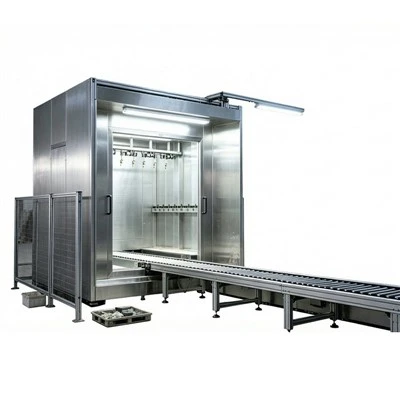
First, let’s get one thing straight: automation isn’t a one-size-fits-all swap. You can’t just yank out every manual station and plug in a robot arm and call it a day. Every part your line paints is different—size, shape, surface material, even the type of paint used—and your existing conveyor layout matters too. I once worked with a furniture maker who tried to skip the planning phase and ended up with a robot that couldn’t reach the back of a wooden chair leg, which meant they still had to send every 10th part back for a manual touch-up, defeating the whole point. So step one is audit your current process, and I mean a full, detailed audit, not just a quick walkthrough.
Start with your parts. List every single SKU that runs through your manual line, then note their key specs: maximum and minimum dimensions (a small plastic clip isn’t the same as a large metal fence panel), surface texture (smooth steel, porous plastic, porous wood), and paint type (water-based, solvent-based, powder coat—each needs different equipment). Next, map your current conveyor flow: how fast do parts move now? How long does a painter take per part? Are parts hung upside down, sideways, or on a fixed hook? Do you have parts that need masking (like threaded bolts that can’t get paint inside)? That masking step, by the way, is a huge pain point for manual lines—painters often skip small spots to keep up, leading to rework. For automation, you can add manual or automated masking stations, but you need to plan that early.
Once you have that audit done, the next big decision is choosing the right automation type. Most people automatically jump to industrial robots, but that’s not always the best call. For lines with small, high-volume parts (like toy components or electronic casings), a servo-driven reciprocating spray machine is often more efficient and cheaper. These are basically motorized arms that move up and down along a fixed track, spraying parts as they pass by. They’re simpler to program than robots, don’t need a big safety cage (more on that later), and handle consistent, repetitive tasks with zero variation. I installed a reciprocating system for a phone case manufacturer two years ago; their manual line was turning out 800 cases an hour with a 7% rework rate, and the automated line hit 1,200 cases an hour with a 1% rework rate in the first month.
For larger, more complex parts—like car door panels or industrial pump housings—articulated robot arms are the way to go. These have 6 or more axes, so they can twist, turn, and reach angles a reciprocator can’t. The key here is choosing a robot with a payload and reach that matches your biggest part. Don’t overbuy a huge robot that can handle a 100kg part if your max is 20kg—it’ll be slower and more expensive. Also, make sure the robot has a clean room rating if you’re painting parts that need ultra-smooth finishes, like medical devices or aerospace components. A friend in the aerospace industry once made the mistake of using a regular industrial robot that shed metal particles; it took six months to fix the contamination issue and get their line back online.
Once you pick the automation type, you need to integrate it with your conveyor, and that’s where most people run into problems. The biggest integration mistake I see is not syncing the conveyor speed with the spray cycle. If the conveyor moves too fast, the robot or reciprocator will leave thin, uneven coats of paint. If it moves too slow, parts get over-sprayed, wasting paint and adding curing time. The solution here is a closed-loop conveyor system with photoeye sensors that track parts in real time. When a part enters the spray zone, the sensor sends a signal to the sprayer to start, and another signal to stop when the part leaves. You can program the conveyor to slow down slightly for complex parts (like a part with multiple curves that needs extra spray time) and speed up for simple, flat parts. I always recommend adding a variable frequency drive (VFD) to the conveyor motor; it lets you adjust speed on the fly without stopping the whole line, which is a lifesaver when you switch between SKUs.
Next, safety and environmental controls—these can’t be afterthoughts. Manual spray painting lines have safety protocols, but automated lines have more moving parts, more fumes, and high pressure paint that can cause injury. First, safety enclosures: if you’re using robots, you need a hard safety cage around the spray zone, with light curtains that stop the robot immediately if someone reaches in. For reciprocators, often a lower, semi-enclosed barrier works, since they move along a fixed track. Then there’s ventilation: spray painting fumes are flammable and toxic, so your system needs a ventilation system that pulls fumes out of the spray zone at a rate that meets local OSHA or EPA standards. I recently worked with a shop that skipped upgrading their ventilation when they automated, and they had fumes building up that set off the factory’s fire alarm twice in a week. Also, add paint mist extraction filters—they trap over-spray before it gets into the ventilation system, which saves you from cleaning ducts every month and keeps the air clean for your team.
Painting equipment is the heart of the automation, so don’t cut corners here. The spray gun is the most important part; choose a high-atomization airless or HVLP (high-volume low-pressure) gun, depending on your paint type. HVLP guns are better for water-based paints because they use less compressed air, meaning less paint waste and a smoother finish. Airless guns work well for thick solvent-based paints or powder coat. Whatever gun you pick, make sure it’s programmable to adjust spray pattern, pressure, and flow rate per SKU. If you’re switching between a small, flat part and a complex 3D part, you need the gun to widen the spray for flat parts and narrow it to get into crevices. Powder coat is a special case—automated powder coat systems need an electrostatic charge to make the paint stick, and you have to make sure the conveyor is grounded properly, otherwise the paint will repel and cause uneven coats.
Programming the automation is where experience really matters. You can’t just press a button and have the robot or reciprocator know how to spray your part. The good news is that modern systems have user-friendly programming interfaces—most use teach pendants, which let you manually guide the spray gun along the part, mark key points, and save the cycle. For example, if you have a car door, you’d guide the robot to spray the top edge first, then the inside curve, then the bottom, and save each step. For reciprocators, you can input the part shape dimensions, and the system will automatically adjust the spray path. I always recommend doing a test run with a few parts before going fully live. Run 10-20 parts through the line, check for uneven coats, missed spots, or over-spray, and tweak the program before training your team to run it.
Training is the final, most overlooked step in automating a manual spray painting conveyor. A lot of factory managers assume that once the robot is installed, the line will run itself, but that’s not true. You still need someone to load parts, unload them, fix jams, and adjust the system when switching SKUs. The operators who run your automated line need to know how to change paint colors, adjust the spray pressure, troubleshoot common issues (like a clogged spray gun), and reset the system if there’s a stop. I spent three days training the team at a metal fabricator in Ohio last year, and by the end of the week, they were more comfortable with the robot than the old manual painters had been with their hoses. It also helps to have a regular maintenance schedule. Clean the spray guns daily, check conveyor belts for wear, lubricate moving parts, and do a full system check every month. A small issue left unaddressed can shut down the whole line for hours, which kills productivity.
Let’s talk about the ROI, because that’s what everyone cares about. When you automate a manual line, you’ll save on labor costs first. A manual painter makes $15-$25 an hour, plus benefits, and works 40 hours a week. An automated system runs 24 hours a day if you want, with one operator overseeing three lines at a time. You’ll also cut paint waste—manual painters often waste 15-20% of paint on over-spray, while automated systems waste 5% or less. Rework rates drop too; I’ve seen numbers go from 10% rework on manual lines to 1% on automated ones, which is huge for reducing material costs. For example, a client in Texas with a 10-station manual line that produced 5,000 parts a week spent $12,000 a month on labor, $8,000 on paint waste, and $5,000 on rework. After automating, they cut labor to $4,000 a month, paint waste to $2,500, and rework to $500. Their total monthly savings were $12,000, and the system cost them $35,000—so they paid it off in less than three months.
That said, automation isn’t for every shop. If you only run small batches of custom parts, automation might not make sense—switching programs every time you change a part could take longer than just painting manually. But if you run consistent, high-volume parts (more than 1,000 a week), automation is almost always worth it. I’ve had shops with as few as 3 employees go from working 12-hour days to 8-hour days after automating, and still double their output.
At the end of the day, automating a manual spray painting conveyor is about making your operation better for your team and your bottom line. It’s not a scary, complicated process if you take the time to plan, choose the right equipment, and invest in training. You’ll reduce fatigue for your workers, cut costs, and produce more consistent, higher-quality parts. If you’re ready to stop struggling with manual lines and start building a more reliable operation, reach out to talk through your specific needs. I’ve helped hundreds of shops across different industries find the right automation solution, and I can help you too.
Spray Coating Machines References
- Occupational Safety and Health Administration (OSHA). Spray Finishing Safety Guidelines. U.S. Department of Labor, 2022.
- Society of Manufacturing Engineers (SME). Automation Guide for Surface Treatment Operations. SME, 2021.
- National Paint and Coatings Association (NPCA). Automated Spray Painting Best Practices. NPCA, 2020.
Wanyuan Yuanwei Automation Equipment Co., Ltd.
With abundant experience, we are one of the most professional spray painting conveyor systems manufacturers and suppliers in China. Please feel free to wholesale high quality spray painting conveyor systems for sale here from our factory. Good service and punctual delivery are available.
Address: No.392, Wanbai Road, Baisha Town, Wanyuan City, Dazhou City, Sichuan Province
E-mail: wanyuanyuanwei@outlook.com
WebSite: https://www.yuanweiautomation.com/
