As a floor display stand supplier who’s worked with retailers, brand managers, and small business owners across industries, I’ve seen my fair share of preventable display disasters: snack boxes sliding off a checkout stand during a holiday rush, lightweight apparel hangers toppling over mid-foot traffic, beauty testers crashing to the floor when a customer brushes a stand with their jacket, and even larger items like small kitchenware tipping over because the setup felt “good enough” at the time. Over 12 years in this business, I’ve learned that securing items to your floor display stand isn’t just a nice-to-have—it’s a core part of protecting your product, reducing staff downtime, and keeping your space safe for customers and employees alike. Today, I’m breaking down the science of securing items to these stands, with actionable steps I’ve refined from working with hundreds of clients, plus common mistakes I see all too often. Floor Display Stands

First, let’s start with the basics that many people overlook: matching the securing method to both the item and the stand. Not every display needs heavy-duty hardware, and forcing a method that doesn’t fit leads to either wasted money or failed security. For example, a 10-pound bag of gourmet popcorn on a checkout counter display has very different needs than a 50-pound stack of metal utensils on a aisle endcap stand. Let’s break this down by item type, since that’s the easiest place to start.
Lightweight items (1 to 10 pounds) – think single-serve snacks, lip balm tubes, small stickers, or greeting cards – don’t need industrial fasteners, but that doesn’t mean they can’t slip. The most common mistake here is relying solely on the stand’s shelf surface, which is often a smooth plastic or coated metal. On flat surfaces, even a small nudge can send a stack of lip balm rolling off. For these items, low-profile, non-intrusive solutions work best. I recommend clear double-sided adhesive pads, specifically the kind designed for retail display use, not the generic kind you buy at a dollar store. The retail-grade versions have a higher bond strength for smooth surfaces, and they leave no residue when removed – critical if you’re switching displays or moving items to a different stand. Another option for lightweight, boxed items is shelf edging: low, plastic or rubber strips that clip onto the front of a shelf to create a lip. I’ve had clients use these for years for snack boxes, and they work especially well on endcap stands where foot traffic is higher. A quick pro tip here: never use regular masking tape or duct tape. Duct tape can leave a sticky mess on both the product and the stand, and masking tape won’t hold up if the stand’s surface is even slightly warm (like near a heater or a lighting fixture). For smaller loose items, like pins or keychains, add a small, see-through plastic bin with a secure snap lid to your display; the bin itself can be secured to the stand’s shelf with a single adhesive pad, so it doesn’t slide.
Medium-weight items (10 to 30 pounds) – think apparel hangers with t-shirts, candle sets, small cosmetic display units, or stackable books – require a little more stability. These items are heavy enough to cause damage if they fall, but not so heavy that the stand itself will tip over if the item is secured incorrectly. Here, the key is combining surface grip with a physical restraint. For clothing racks (a common type of floor display stand for apparel), I recommend using metal display hooks that lock into the stand’s horizontal bars. Many people just hang the hanger on the hook, but locking hooks have a small tab that clips over the hanger’s bar, so even if someone pulls hard on a shirt, the hanger won’t slide off. For shelf-based medium-weight items, like candle jars or decorative containers, shelf support brackets are a better option than adhesive. These are small, L-shaped plastic or metal brackets that screw into the underside of the shelf, creating a lip that holds items in place. They’re easy to install, and they’re much stronger than adhesive for consistent, medium-weight loads. I also recommend testing the weight capacity of your specific stand before loading it. Every floor display stand I supply has a clearly marked weight limit, and I can’t tell you how many times a client has loaded a stand past that limit because they thought “it looks sturdy enough.” Exceeding the weight limit not only risks the item falling, but it can warp the stand itself, making it useless over time.
Heavy items (30 pounds and up) – think small kitchen appliances, stackable wine cases, large display bins of hardware, or even educational products like board game sets – require a more robust approach, and in most cases, combining multiple methods is non-negotiable. The biggest risk here isn’t just the item falling, but the stand tipping over entirely if the load is uneven or the base isn’t stable. For heavy items, first make sure your floor display stand is placed on a flat, level surface. I’ve seen stands placed on uneven tile or carpet ridges tip over when a heavy load shifts, even if it was perfectly balanced on a level floor. If your space has uneven flooring, use small rubber floor pads under the stand’s legs to level it out; these also add grip so the stand doesn’t slide across the floor if bumped. Next, for the item itself, use heavy-duty fasteners: either screws designed for display use, or locking metal brackets that attach the item’s base to the stand’s shelf. For example, if you’re displaying a small microwave on a floor stand, you can screw a metal plate to the underside of the microwave’s base, then attach that plate to the stand’s shelf with bolts. This creates a rigid connection that won’t shift, even if someone pulls on the microwave’s handle. Another option for heavy, stacked items like wine cases is vertical display brackets: these are metal bars that slide into the stand’s side rails, holding each layer of wine boxes in place so they don’t slide forward and tip the stand. I also recommend using a safety tether for very large, irregularly shaped heavy items. These are strong, adjustable straps that attach the item to the stand’s back bar, preventing it from pulling the stand forward if it’s bumped. I’ve used tethers successfully for display cases of glassware, which are both heavy and fragile if they fall.
Beyond item-specific solutions, there are stand-wide strategies that work for every type of floor display stand, no matter what you’re stocking. The first is considering foot traffic in your space. If your display is near a high-traffic area, like a store’s main entrance or a checkout lane, items are more likely to be bumped, so you need a higher level of security. I usually suggest adding an extra adhesive pad or a locking tab for displays in high-traffic zones, even if the item is lightweight. For example, a set of lip balm display tubes near the front door is way more likely to get brushed by a customer’s purse than the same tubes in a quiet aisle, so adding a small shelf edging lip is a simple fix. Another stand-wide tip is inspecting your display regularly. I tell all my clients to do a quick check of their stands at least once a week, and after any large restock. Adhesive pads can lose their grip over time, especially if the stand is near a heat source that weakens the bond, so replacing them every 30 to 60 days is a good habit. Locking hooks can come loose if items are pulled repeatedly, so checking that they’re securely clipped in is a quick step that prevents accidents.
I also want to address a common misconception: that securing items makes the display look cluttered or unapproachable. Many clients hold back on using edging or brackets because they want their display to look open and inviting, but the opposite is true. A display with items falling off, stacked crookedly, or labeled “sorry, out of stock” because items slid off is far less appealing than a neat, secure display that’s easy for customers to browse. I’ve seen clients add low-profile clear shelf edging to their snack stands, and customers don’t even notice it – but they do notice that the snack boxes stay where they’re supposed to, making the display look organized and trustworthy.
Now, let’s talk about the mistakes I see most often, because avoiding these can save you a lot of hassle. First, using generic hardware from a hardware store instead of display-specific products. Generic screws or adhesive are not designed for retail environments, where items are bumped, moved, and changed out regularly. Display hardware is made to be easy to install and remove, without damaging the stand or the product. Second, over-securing items to the point of making them inaccessible. There’s a line between securing an item and making it impossible for a customer to pick up or examine. I once had a client who screwed a candle display to the stand so tightly that employees had to use a screwdriver every time they needed to restock, which slowed down their whole operation. The goal is to balance security with convenience – locking hooks are perfect here, because they hold the item in place but are easy to release when restocking. Third, not accounting for variable conditions. If your store has very high humidity (like a bakery or a grocery store’s produce section), adhesive pads will lose their grip faster. In that case, using metal brackets is a better choice, because humidity doesn’t affect metal the same way it affects adhesive. For stores with very low humidity (like a art supply shop in a dry climate), adhesive might work longer, but you still need to test it first.
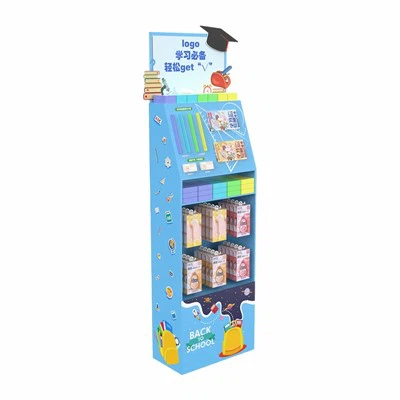
As a floor display stand supplier, my goal isn’t just to sell you a stand – it’s to make sure that stand works for your business, and that your products stay safe, visible, and easy for customers to access. If you’re unsure about the best way to secure items to your specific stands, or if you’re looking for display hardware that’s designed for your industry, I’m here to help. Whether you’re outfitting a single checkout stand for a small boutique or a dozen endcap stands for a large retail chain, we can work together to find the right combination of securing solutions that fit your needs, your space, and your products. Don’t let preventable display issues cost you sales or create a safety hazard – reach out to our team to discuss your requirements, and we’ll guide you through every step.
Cardboard Floor Display Stand References
- Retail Merchandising and Display Association. (2021). Best Practices for Display Stability and Safety in Retail Environments.
- National Fire Protection Association. (2019). Retail Space Safety Guidelines for Displays and Storage.
- Display Manufacturers of America. (2022). Specifications for Load Capacity and Security Hardware for Floor Display Stands.
- Consumer Product Safety Commission. (2020). Preventing Display-Related Injuries in Retail Settings.
Guangzhou Guangjie Display Products Manufacturing Co., Ltd.
We’re well-known as one of the leading floor display stands manufacturers in China, also support customized service. Welcome to buy bulk high quality floor display stands at competitive price from our factory. If you have any enquiry about pricelist and quotation, please feel free to email us.
Address: No.16-1 Lilv Road, Dashi Street, Panyu District, Guangzhou City, Guangdong Province
E-mail: guangjie_dp888@163.com
WebSite: https://www.gjdisplaystand.com/
