Hey folks, let’s cut to the chase—if you’re working with electronics (whether you’re a hobbyist messing with Arduino kits, an engineer designing power supplies, or someone just trying to keep your gear from overheating), you’ve probably wondered this: What’s the operating temp range for drum core inductors? As a supplier that’s been hooking up engineers and builders with these components for a minute, I see this question way more than you’d think. Most people either guess way too wide (and end up with a part that dies in their device) or way too narrow (wasting cash on over-engineered parts they don’t need). Let’s break this down like we’re geeking out at a workbench, no stuffy jargon, no fluff. Drum Core Inductors
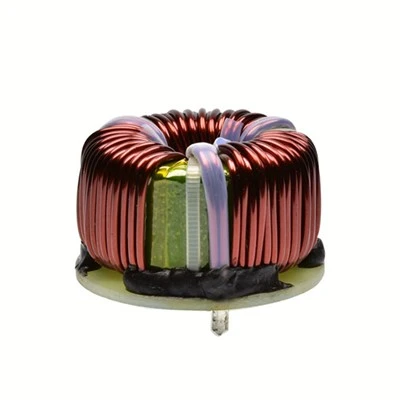
First, let’s get what a drum core inductor even is, quick, so we’re on the same page. These aren’t those big, bulky inductors you see in old tube radios. Drum core inductors are compact—their “core” is shaped like a little drum, usually made of ferrite (that squishy-sounding magnetic ceramic stuff), with wire wrapped around it. We use ’em for filtering, smoothing out power, stuff like that in everything from phone chargers to EV on-board chargers. The big thing with any inductor? Heat. If it gets too hot, its performance goes to crap, or worse, it fails completely.
So, the baseline: Standard drum core inductors—90% of the ones we supply for everyday applications—operate between -40°C (-40°F) and 125°C (257°F). Wait, that range might not sound wild, but let me put that in perspective. That’s cold enough to run outdoors in Minnesota in January (that’s no joke, I’ve worked with a customer who tested his gear there and needed parts that didn’t crack) and hot enough to sit on top of a power supply that’s running a laptop nonstop (we’ve tested these parts on our own bench with heat guns, not to be confused with the craft kind). But hold on—“standard” is the key word here. Not all drum cores are created equal.
Some applications need more. Like, if you’re working on industrial gear that’s gonna sit in a factory where summer temps hit 150°F (way hotter than room temp, and that’s just the ambient air, plus the inductor itself will run even hotter from carrying current). We have custom high-temperature drum cores that go all the way up to 155°C (311°F) max. And don’t sleep on cold extremes—if you’re building gear for a weather balloon, or Arctic field equipment, we supply parts that keep working down to -55°C (-67°F). Those are the outliers, though, not the off-the-shelf stuff.
Now, why does temperature matter here? Let’s get into the science without boring you. The ferrite core is the heart of a drum inductor. Ferrite’s magnetic properties change when it gets too hot—above its “Curie temperature,” it stops being magnetic entirely. For standard ferrites, that’s around 150°C, so we cap operating temp 20°C below that, to leave a buffer. Push it past that, and your inductor goes from filtering power to acting like a paperweight—no magnetic field, no function. For cold temps, ferrite doesn’t actually lose magnetism, but the wire coating (the enamel around the copper wrap) can get brittle if it’s too cold. Cheap coatings crack, good ones (the ones we use) stay flexible down to -55°C. That’s why part selection isn’t just about the temp range printed on the box—it’s about the materials.
Wait, let’s talk about real-world pain points. A customer of ours last year ordered 5,000 standard drum cores, tested them at room temp, everything worked, then installed ’em in a food processing plant. The plant’s conveyor belt control boxes sit in a closed cabinet where temp hits 140°F (way too hot for standard parts). Within two weeks, 12% of the inductors failed. They came back to us, and we swapped ’em for our high-temp models—those have ceramic cores (different from ferrite) that handle the heat, and higher-grade wire coating. No failures after that. That’s exactly why you can’t just grab any drum core off the shelf and call it a day.
Another thing: Temp range is’t just about ambient temp. It’s about the inductor’s “internal temp rise.” When an inductor carries current, it generates heat—Joule heating, right? So if your ambient temp is 80°F (27°C), and the inductor’s internal temp rise is 50°C, that brings the total to 130°F (54°C)—nowhere near the max, that’s fine. But if you’re running a high-current circuit, the internal temp rise could be 80°C, so at a 90°F ambient, total is 170°F (77°C)—way past the standard drum core’s max 125°C. That’s a recipe for failure. I can’t tell you how many engineers forget that part. They look at the ambient temp, ignore the heat from the part itself, and end up with a mess.
What about hobbyists? You guys might be building a pedal for your guitar, or a charger for your RC car. For you, the standard -40 to 125°C range is more than enough. Most hobby projects don’t push components to the edge. But if you’re building a high-power amp that gets warm, maybe go for a part with a 10°C buffer—no need for the expensive industrial ones, just a slightly higher-grade standard part.
Now, let’s clear up a common myth: Some people think “higher temp range = better inductor.” Not necessarily. A part rated for 150°C might be more expensive, and if you don’t need that extra headroom, you’re wasting money. Stick to the minimum range that fits your application. That’s where working with a supplier who knows their stuff helps—we’ll ask you about where the part’s gonna go, how much current it’ll carry, what kind of temp swings it’ll see, and point you to the right one.
Wait, let’s talk about testing. When we get new drum cores in, we test ’em in a temp chamber. We crank it down to -50°C, hold it for 24 hours, make sure the inductance doesn’t drop more than 5% (that’s the spec we go by), and the wire doesn’t crack. Then we crank it up to 140°C, hold it for the same amount of time, check for magnetism, check the insulation. If it passes, it’s good to go. If not, we tweak the material. That’s why our parts are reliable—we don’t just rely on the manufacturer’s spec sheets, we test ’em ourselves.
So, to sum up, quick:
- Off-the-shelf drum core inductors: -40°C to 125°C. That’s the sweet spot for 90% of applications (consumer electronics, small industrial, hobby stuff).
- High-temp models: Up to 155°C, for industrial, automotive, or any place that’s extra hot.
- Cold-temp models: Down to -55°C, for outdoor gear, aerospace, Arctic use.
- Always factor in internal temp rise from current—don’t just look at ambient temp.
Now, if you’re still not sure which range you need, or you’ve run into a failure because you picked the wrong part, hit us up. We’re not the kind of supplier that sends you a spec sheet and walks away. We’ll ask you a few quick questions: What’s the device going in? What’s the max temp it’ll see? How much current does the inductor carry? We can hook you up with samples, help you pick the right part, and even work with you if you need a custom range for a weird application. No jargon, no hidden fees, just people who know drum cores and want your project to work.
And hey, if you’ve got a story about a component failing because of temperature, or a tip for picking the right inductor, drop a comment—I’ve heard some wild ones (that food plant guy is still my favorite). We’re always learning, too.
Power Conversion Transformers References:
- Electronics Hub. (2023). Inductor Temperature Range and Its Effects on Performance.
- Mouser Electronics. (2024). Drum Core Inductor Application Notes for Industrial and Automotive Systems.
- Texas Instruments. (2022). Component Reliability in Extreme Temperatures: A Guide for Design Engineers.
- Ferrox Ferrite Co. (2021). Core Material Properties for Inductors in High-Temperature Environments.
- Electronic Components Industry Association (ECIA). (2023). Standard Specification for Surface-Mount Inductor Operating Temperatures.
Shenzhen Haoyanlin Electronics Co., Ltd.
With abundant experience, we are one of the most professional drum core inductors manufacturers and suppliers in China. Please feel free to buy advanced drum core inductors made in China here from our factory. All custom made products are with high quality and competitive price.
Address: Room A306, Building A, Hongwan Business Center, No.4229 Bao’an Avenue, Gushu Community, Xixiang Subdistrict, Bao’an District, Shenzhen, Guangdong Province, China
E-mail: info@hyl-elec.com
WebSite: https://www.hyl-elec.com/
