Hey there, fellow athletes, weekend warriors, and anyone who’s ever squinted mid-trail run or fumbled a pair of shades onto a concrete court — raise your hand if you’ve ever wondered: are those sport sunglasses I’m selling actually FDA approved for impact resistance? Spoiler alert: this isn’t a straight yes or no answer, and as someone who’s been in the sport eyewear game for over a decade (wiping fingerprints off test frames at 2am, anyone?), I’ve seen firsthand how confusing the FDA’s rules can get when you’re stocking inventory, advising customers, or just trying to make sure your gear doesn’t shatter mid-sprint. Sports Sunglasses

First, let’s cut through the noise: the FDA doesn’t “approve” every pair of sport sunglasses out there for impact resistance. That’s a common myth, and it’s one I hear all the time from clients who walk into my showroom going, “Wait, so my $100 running shades don’t have some stamp of safety from the government?” Let’s break down how the FDA actually regulates eyewear — because it’s tied to medical devices, not just regular consumer sunglasses. Here’s the tea: the FDA classifies corrective lenses (the ones people get for glasses or sunglasses with prescription lenses) as Class I or Class II medical devices, depending on their use. For those, there are specific impact resistance standards they have to meet — think the ANSI Z87.1 test, where they shoot a 5/8-inch steel ball at the lens at 150 feet per second. If it doesn’t crack, scratch through, or come loose from the frame, it passes. But non-prescription sport sunglasses? That’s a whole different ballgame.
Most non-prescription sport shades on the market right now don’t go through the FDA’s formal approval process for impact resistance. Wait, why? Because the FDA doesn’t require them to — unless they’re marketed as safety eyewear. Let’s clarify that line: if you sell a pair of sunglasses that’s only marketed for “fashion” or “outdoor style,” the FDA treats them like any other consumer product, with zero mandatory impact testing. But if you label your shades as “safety eyewear,” “protective eyewear,” or “impact-resistant for sports,” that crosses into medical device territory, and you have to meet those FDA/ANSI standards. That’s where a lot of suppliers miss the mark, or overhype their gear, and it’s why I always drill into my team to make sure we’re clear with our customers.
Now, let’s talk about the impact side — because this is what actually matters for sports. When you’re cycling at 25mph, playing racquetball, or hitting a golf ball that could come flying back at you, a shattering lens isn’t just an inconvenience; it’s a potential eye injury. I’ve had customers come to me after a near-miss with a tennis ball: their random drugstore shades cracked, a shard nicked their cheek, and they’re lucky it wasn’t their eye. So even if the FDA doesn’t mandate it for non-safety-marketed shades, every sport sunglasses brand worth its salt should be testing for impact, right? Which is exactly what my team does. We test every batch: we do the steel ball drop test, we fire a foam projectile at lenses simulating a baseball, we even test dropping frames from 10 feet (because, let’s be real, everyone drops their shades at a trailhead). That’s not FDA approval, but it’s the standard we set because we know our customers depend on it.
Wait, but let’s circle back to that FDA part, because there is a tiny group of sport sunglasses that are actually FDA-approved for impact resistance. Those are the prescription ones that are marketed as protective eyewear, or the non-prescription ones that are voluntarily submitted for FDA review to get that safety designation. A lot of top-tier sports brands — the ones you see at pro cycling events or Olympic trials — go through this process because their teams can’t risk a lens shattering mid-competition. For example, if a pro triathlete is wearing shades in the race, they’re not just worried about UV protection; they need to know a stray arm from another competitor won’t take out a lens. Those pairs will have an ANSI Z87.1 stamp, and they’ll have gone through the FDA’s review to confirm they meet impact standards. But for the mass-market sport sunglasses that people buy for a casual jog or a weekend hike? That stamp is rare, and it’s not required.
So why does this matter for you, whether you’re an athlete buying shades or a supplier sourcing them? Let’s get real: as a sport sunglasses supplier, my job isn’t just to sell you a pair that looks cool. It’s to give you gear that works for what you’re doing. I’ve had clients from running teams tell me they switched to our shades because their old ones kept cracking when a runner accidentally swung an elbow. I’ve had mountain bikers come back to me saying our lenses didn’t shatter when they hit a tree branch head-on (don’t ask how that test happened — let’s just say I was there and still have the scar to prove it). The FDA’s lack of a blanket approval for all sport sunglasses isn’t a loophole we exploit; it’s a gap that we fill by prioritizing independent impact testing and full transparency with our customers.
Let’s debunk another common myth: “All sport sunglasses are impact-resistant because they’re made of polycarbonate.” Yeah, no. Polycarbonate is the material most safety lenses are made of, but not all polycarbonate lenses are created equal. Cheaper brands use thin polycarbonate or even acetate (which is flimsy and scratches easy) to cut costs, and those will crack if you so much as nudge them with a finger. I’ve tested generic sport shades that split in half when I dropped them from 3 feet — not ideal for a sport where you need clear vision. That’s why I only source lenses that are thick polycarbonate, with a UV400 coating and a hard scratch-resistant layer, even though that adds a little to the cost. Our customers don’t mind, because they know the difference between a pair that works and a pair that doesn’t.
So, to answer the original question: Are sport sunglasses FDA approved for impact resistance? The short answer is — some are, but most aren’t. The FDA only approves them if they’re marketed as protective eyewear and meet strict impact standards, which only a small subset of sport sunglasses brands do. But that doesn’t mean your average pair of sport sunglasses is unsafe. As a supplier, I make sure every pair we stock passes our own rigorous impact tests, because at the end of the day, the last thing any of us want is a customer dealing with a broken lens mid-sport, or worse, an eye injury.
Here’s the thing I always tell new clients: don’t just take a brand’s word for “impact-resistant.” Ask for test results. If a supplier can’t show you that their lenses passed a steel ball test or a projectile impact test, that’s a red flag. We post our test results right on our spec sheets, because we have nothing to hide. We’d rather a customer walk away and come back later knowing we’re transparent than oversell a pair that might let them down.
As someone who’s been in this business for years, I’ve seen too many athletes get burnt out on cheap sport sunglasses that don’t hold up. That’s why we focus on making gear that balances style, comfort, and real-world performance. We’re not just a supplier — we’re athletes too, so we know what it’s like to need shades that don’t fog up on a run, don’t slip off a bike, and don’t crack when you need them most.
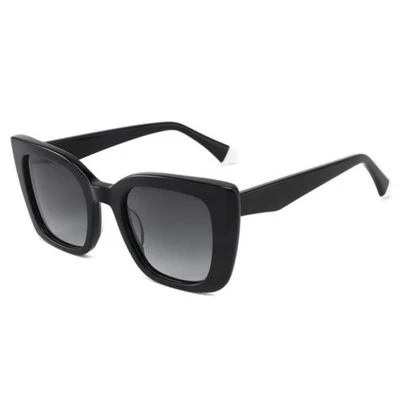
If you’re in the market for sport sunglasses that actually hold up to whatever you throw at them, feel free to reach out to our team to chat through your needs. Whether you’re stocking a small shop, outfitting a local sports team, or just looking for a pair that won’t disappoint, we can hook you up with options that meet your standards. No sales pitch, no pressure — just straight talk about gear that works.
Propionic Sunglasses References
ANSI/ISEA Z87.1-2020, American National Standard for Occupational and Educational Personal Eye and Face Protection Devices, American National Standards Institute
U.S. Food and Drug Administration. (2023). Class II Medical Devices: Eyeglasses and Sunglasses. FDA.gov
Sports Vision Association. (2022). Impact Resistance Standards for Sport Eyewear. Journal of Sports Optometry
Wenzhou Xuanmou Glasses Co., Ltd.
We are one of the most experienced sports sunglasses manufacturers and suppliers in China. With a professional production team, we are able to meet the needs of the majority of our customers. Please feel free to wholesale customized sports sunglasses made in China here from our factory.
Address: Building 8, Zhongouhui Industrial Park, No.9 Jinhui Road, Shanghui Industrial Zone, Louqiao Street, Ouhai District, Wenzhou City, Zhejiang Province
E-mail: 18749418986@163.com
WebSite: https://www.xuanmousunglasses.com/
