Hey folks, welcome back to another one of our quick deep dives into all things packaging films—today we’re tackling a question we get nonstop at the warehouse, in DMs, and even at trade shows: Does matte CPP film have a smooth or textured surface? Look, as someone who’s been supplying matte CPP film for 7 years now, I’ve heard every angle on this from customers who are tired of guessing which product actually fits their needs, to small business owners who just want their branded packaging to look right. Let’s cut through the confusion here, no stuffy jargon, just the real tea. Matte CPP Film
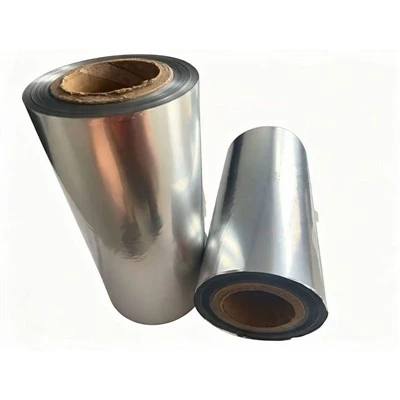
First off, let’s make sure we’re all on the same page: matte CPP stands for Cast Polypropylene film, a workhorse in flexible packaging—you see it on snack bags, candy wrappers, labels, even the back of some self-adhesive stickers. The “matte” part is what throws people, right? When you hear “matte,” your brain probably jumps to that grippy, non-smooth finish you get on a chalkboard or uncoated cardstock. But here’s the thing: matte CPP doesn’t actually have a rough, bumpy, or textured surface. Wait, hold on—don’t roll your eyes yet, let me explain.
A lot of folks mix up two key types of film finishes, especially when we’re talking about CPP: textured (sometimes called embossed) films vs. matte films. Let’s break those down quick. Textured films get that surface from either embossing (running the molten polypropylene between two patterned rollers) or adding micro-sized particles during extrusion to create tiny, uneven peaks and valleys. Think of the textured side of a DVD case, or the grip on a water bottle label—you can actually feel that texture if you run your finger over it. That’s not matte CPP, that’s a totally different product we sell too, but it’s not what most people mean when they ask about matte finish.
Now, back to our main subject: true matte CPP film. How does it get that soft, non-glossy look without feeling bumpy? It’s all in the chemistry of the surface, not physical texture. During the manufacturing process, we adjust the corona treatment (that’s the electrical charge we use to make the film stick to inks, adhesives, etc.) and modify the surface of the polypropylene to scatter light instead of reflecting it straight back. A glossy film, like regular CPP, has a super smooth surface that bounces almost all light in one direction—so it looks shiny. A matte one has tiny, invisible surface irregularities (way too small to feel, even with your fingertip) that bounce light every which way. So when you run your hand over it, it feels as smooth as a sheet of paper, but visually, it’s definitely not glossy.
I know, I know—this seems like splitting hairs, but it matters so much for what you’re using the film for. Let’s use a real example, like a craft brewery that uses matte CPP for their six-pack carriers. If they thought matte meant textured, they might buy a film with that grippy finish, which would make printing their logo blurry because the ink can’t lay flat on an uneven surface. But if they get actual smooth matte CPP, their brand’s design looks crisp, the film slides easily on packaging equipment, and it doesn’t catch on other products in a shipment. Last year, a local brewery switched over from a textured film they hated to our matte CPP, and they told us their print costs dropped 12% because they had way fewer misprinted carriers. That’s the kind of real impact that comes from getting the surface right.
Wait, let’s clarify a common mistake: some cheaper manufacturers will call a textured film “matte” to trick customers who don’t know the difference. They figure if you don’t care whether it’s smooth or textured, you’ll just pick the cheaper price. But that’s a bad call—if you need the film to run through high-speed packaging lines (which most factories use these days), a textured surface will cause jams, because the peaks catch on rollers or other film layers. We had a client a couple months back who switched from that cheap “matte textured” stuff to our smooth matte CPP, and their line downtime went from 45 minutes a day to 5 minutes. Game changer, right?
Now, let’s get specific about what “smooth” really means here. When we say our matte CPP is smooth, we mean it has a surface roughness (measured in micrometers, for the nerds out there) of less than 0.2 microns—way below what you can feel. A human finger can detect texture only if it’s above 0.5 microns, so our matte film is literally smooth to the touch. Glossy CPP is even smoother, around 0.1 microns, but it’s shiny. The difference is in light, not feel. That’s a fact we get asked about all the time, so it’s good to have it straight.
Another use case: food packaging. A lot of people think a textured film is more sanitary, but that’s not true. A smooth surface is actually easier to clean and less likely to trap food residue or bacteria, which is why the FDA approves smooth matte CPP for direct food contact. Textured surfaces have tiny crevices that can hold grease, crumbs, or other gunk, even if you can’t see it. We work with several snack food brands that switched to our matte CPP for their chip bags because their quality control team noticed less cross-contamination during production. It’s a small detail, but it adds up to big savings.
Wait, let’s address the elephant in the room: why do some people swear matte CPP is textured? They’re probably confusing it with other types of film, like matte BOPP (biaxially oriented polypropylene) or matte PET (polyethylene terephthalate), which might have slightly different surface treatments. Or maybe they handled a sample that had a manufacturing defect—sometimes a small batch might have uneven surface from a roller issue, but that’s not the standard product. As someone who’s quality-checking every roll before it leaves our warehouse, I can tell you that’s a rare exception, not the rule. We test every batch’s surface smoothness with a digital roughness tester, so our customers don’t have to guess.
Let’s wrap up the key points here to make it easy: 1) Standard matte CPP film has a smooth, non-textured surface—you won’t feel any bumps or unevenness when you run your hand over it. 2) The matte finish comes from light scattering, not physical texture. 3) Textured films are a separate product, good for things like anti-slip labels or decorative wraps, but not what you want for most packaging or printing jobs. 4) Smooth matte CPP is better for high-speed lines, clear printing, and food safety.
Now, if you’re out there shopping for matte CPP film, let me save you some time: don’t just ask for “matte film” and hope it’s smooth. Ask the supplier for the surface roughness specs, or better yet, request a sample. We always send free samples within 24 hours, no strings attached, so you can run your finger over it, test how it prints, and see for yourself. We’ve had so many customers come back after realizing they were buying the wrong product for years, and switching to our smooth matte CPP made their whole operation easier.
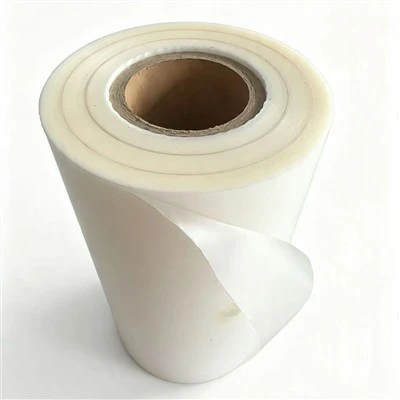
If you’re ready to stop guessing and get a matte CPP film that actually fits your needs, hit us up for a quote or to ask any other questions—we’re here to help, no pushy sales stuff, just straight answers. Whether you’re a small craft brand just starting out or a big packaging company needing consistent rolls, we’ve got you covered.
Cast Polypropylene Film References
- "Polypropylene Film: Manufacturing, Properties, and Applications" – Journal of Plastic Film & Sheeting, 2021
- "Surface Roughness Effects on Packaging Line Performance" – Flexible Packaging Association Technical Report, 2022
- "Matte Finish Technology in Polyolefin Films" – International Packaging Research Institute, 2020
- "Food Contact Materials: Smooth vs. Textured Surfaces for Sanitation" – FDA Food Safety Modernization Act (FSMA) Technical Brief, 2021
Qingzhou Huiyuan Packaging Materials Co., Ltd.
As one of the most professional matte cpp film suppliers in China since 1997, we’re featured by quality products and good service. Please feel free to buy cheap matte cpp film made in China here from our factory. For price consultation, contact us.
Address: Naoshan Industrial Park, Shaozhuang Town, Qingzhou City, Weifang, Shandong Province, China.
E-mail: 15864598133@163.com
WebSite: https://www.huiyuanfilms.com/
