If you’re working with electric motors, generators, or any rotating equipment, you’ve probably heard the term “stator coil ground out” thrown around—and it’s not a good thing. When a stator coil grounds out, it means the winding’s insulation that separates the conductive copper wire from the metal stator core has broken down, creating a direct electrical path between the coil and the core. This can shut down machinery unexpectedly, damage parts, or even create safety hazards. As a stator coils supplier, I’ve seen this issue mess up projects for small shops and big manufacturers alike, so let’s break down exactly what causes it, how it happens, and what you can do to avoid it. Stator Coils
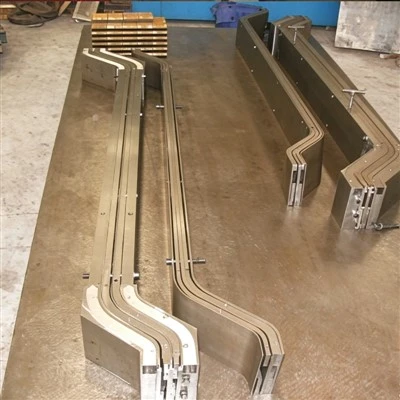
First, let’s get the basics straight. The stator is the stationary part of your motor or generator, and its coils carry the AC current that creates the rotating magnetic field needed to turn the shaft. Those copper coils can’t touch the stator core (the metal frame that holds everything in place) because that would cause a short to ground—aka a ground out. Insulation, usually a tough resin or enamel coating on the wire, plus thin paper or film layers between the coils and the core, is what keeps them separate. But over time, or from misuse, that insulation can fail. Let’s go through the most common causes, in plain terms, no fancy jargon unless I have to.
Number one: Thermal stress. This is the big one, and it’s usually gradual. Every time a motor cycles on and off, the coils heat up as current flows through them, then cool down when they shut off. That heat causes the copper wire to expand, and when it cools, it contracts. Do this thousands of times, and the insulation starts to crack, peel, or even melt a little. Overloading a motor makes it way worse—if you’re running a motor at 150% of its rated load, the coils get way hotter than they should, and that constant extreme heat cooks the insulation from the inside out. I’ve had a customer last year who was using a 50HP motor for a pump that moved way more water than it was rated for; six months later, the stator coils grounded out because the heat had turned the insulation brittle. Even just frequent starting and stopping (like a motor that turns on and off every minute all day long) can speed this up. The insulation can’t keep up with the expansion and contraction, and eventually, a tiny crack forms, letting the copper touch the core.
Second: Mechanical damage. Stator coils are delicate, especially when they’re being installed or handled. If a tech drops a coil, or if when they’re pushing it into the stator core, they nicked the insulation with a tool, that’s a problem. Even something as small as a burr on the stator core’s slots can wear through the insulation over time as the motor vibrates. Vibration is another big mechanical factor—machinery that runs rough (like a motor on a wobbly mount, or connected to a pump that’s out of alignment) causes the coils to rub against the core or each other. Years of that friction wears down the insulation, and boom, ground out. I’ve seen this happen with industrial fans that run 24/7; after a couple of years, the coils vibrate enough that they grind through the insulation on the slot walls. Also, if you’re reconditioning a stator, and someone uses too much force when taping or shaping the coils, that can damage the insulation too. As a supplier, we try to make our coils durable, but they’re only as tough as how they’re installed and handled.
Third: Environmental and contamination issues. This is super common in industrial settings. If your equipment is in a dirty, humid, or chemically harsh environment, that stuff gets into the motor’s stator slots and eats away at the insulation. Humidity might not seem like a big deal, but over time, moisture can get past the motor’s seals, and it reacts with the insulation to break it down. Chemicals like oil, solvents, dust, or even salt (if you’re working in a coastal area) can corrode the insulation. Dirt and dust that gets trapped in the slots can act like an abrasive, wearing down the insulation from the outside. I had a customer who runs a woodworking shop; sawdust and wood glue fumes got into the motor, and within a year, the insulation on the stator coils had decomposed enough to cause multiple grounds. Even condensation, from temperature swings in a cold warehouse, can lead to moisture buildup that eats at the insulation.
Fourth: Electrical stress. Not just too much voltage—wait, that’s part of it, but there’s more. Voltage spikes, like from lightning strikes or utility grid surges, can punch holes in the insulation. Those spikes are way higher than the motor’s normal operating voltage, so they literally break down the insulation’s dielectric strength (the ability to resist electrical current). Even switching surges, when a motor turns on or off, can cause small voltage spikes that add up over time. Then there’s partial discharge—tiny electrical leaks inside the insulation that happen when there’s a small void or air bubble in the insulation. Those leaks build up over years, eroding the insulation from the inside, until eventually, it’s thin enough to short to ground. Another electrical issue: wrong voltage. If you install a 240V coil in a motor rated for 120V, or vice versa, the current is off, and it causes extra heat or electrical stress that damages the insulation. That’s a mistake a lot of people make when replacing coils, and it’s a quick way to end up with a ground out.
Wait, also, age-related degradation. Insulation isn’t immortal. Even if you run a motor perfectly, the insulation will break down after 20-30 years, depending on the environment. It just gets old, loses its flexibility, and cracks. I’ve seen old motors in storage—they sat unused for 10 years, and when someone tried to use them, the stator coils grounded out because the insulation had just crumbled. Age is a factor, but it’s usually a combo: old insulation plus maybe a little heat or vibration, and that pushes it over the edge.
Now, as a stator coils supplier, what does this mean for you? If you’re dealing with repeated ground outs, it’s not just about replacing the coils every time. You need to fix the root cause. Let’s say your motors keep grounding out from thermal stress: make sure you’re not overloading them, check the ventilation (clogged vents cause overheating), and maybe upgrade to higher-temperature insulation if your environment is extra hot. If mechanical damage is the issue, improve your installation processes—use insulated tools when handling coils, smooth out the stator slot edges before inserting coils, and make sure your machinery is properly aligned to reduce vibration. For environmental issues, seal your motors better, use filtration to keep dust and chemicals out, and inspect the insulation regularly for signs of degradation. For electrical stress, install surge protectors on your motors, make sure you’re using the right coil voltage, and have a technician check for partial discharges periodically.
Wait, but when you do need to replace stator coils, not all coils are created equal. I’ve seen a lot of people go for the cheapest coil they can find, and it’s just not as durable as the ones we make. Cheap coils might use thinner insulation or lower-quality materials, so they break down faster. That’s why choosing a reliable supplier matters—our coils use Class F or Class H insulation, which can handle higher temperatures and more stress than standard Class A or B, so they last longer and are less likely to ground out. We also test every coil before it leaves our facility to make sure there are no defects that would cause a ground out, so you don’t have to deal with a bad part right out of the box.
If you’re experiencing stator coil ground outs, don’t just throw a new coil in and hope for the best. Figure out why it happened first—if you skip that, you’ll just go through coils over and over. I’ve had a customer a few months back who was replacing a stator coil every 3 months because they were overloading their motor and not checking the ventilation. Once they fixed the ventilation and kept the load within the motor’s rating, their coils now last 2 years minimum, which is way better for their budget and their downtime.
At the end of the day, a stator coil ground out is almost always preventable, as long as you understand the causes and address them. If you’re in the market for new stator coils, or if you’re dealing with repeated grounding issues and want to talk through solutions, feel free to reach out. We can help you pick the right coil for your equipment, give you tips on installation and maintenance to avoid future issues, and work with you to get the parts you need quickly so you can get your machinery back up and running.
Stator Coils References:
- IEEE Std 117-2014, “IEEE Guide for Test Procedures for Synchronous Machines”
- NEMA Standard MG 1-2021, “Motors and Generators”
- International Electrotechnical Commission (IEC) 60034-1, “Rotating electrical machines – Part 1: Rating and performance”
- “Insulation Systems for Rotating Electrical Machines”, European Copper Institute, 2022
- “Root Cause Analysis of Stator Ground Faults in Industrial Motors”, Electrical Construction & Maintenance Magazine, 2021
Hangzhou Purun Science & Technology Co., Ltd.
As one of the most professional stator coils manufacturers and suppliers in China, we have world-leading production equipment and strong manufacturing capabilities. Please rest assured to wholesale customized stator coils made in China here from our factory. Welcome to contact us for pricelist.
Address:
E-mail: Purun_sci_tech@163.com
WebSite: https://www.puruncoil.com/
