If you’ve ever been part of a small industrial operation—think a regional medical facility relying on liquid oxygen for patient care, a food processing plant producing nitrogen to package fresh produce, or a small semiconductor fab needing ultra-pure argon for wafer manufacturing—you’ve probably stared at a blackout and wondered: Can a small air separation unit (ASU) run on backup power? As a supplier of compact, modular small ASUs for exactly these types of businesses, I get this question at least once a week, often paired with a story of a recent outage that cost a client thousands in spoiled product, delayed patient care, or missed production deadlines. The short answer is: Yes, it can—but only if you get the details right. After 12 years of designing, installing, and troubleshooting small ASUs (units that range from 50 to 500 standard cubic feet per hour, or SCFH, of combined oxygen, nitrogen, and argon output, not the massive 100,000 SCFH units you see at global refineries), I’ve seen too many clients buy backup power setups that either leave their ASU dead or waste thousands in unnecessary equipment, maintenance, and fuel. Today, I’m breaking down what actually works, what trips people up, and how to build a reliable backup power system tailored to your small ASU. Small Air Separation Unit
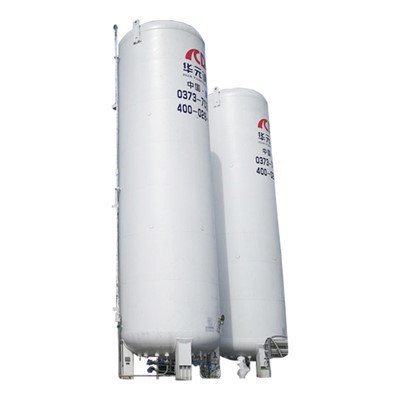
First, let’s get clear on what a small ASU actually needs to run. Unlike big industrial ASUs that use cryogenic cooling or complex distillation towers requiring constant, high-power operation, most small ASUs use two core designs: pressure swing adsorption (PSA) and membrane separation. PSA units, which are the most common for small-scale medical and food applications, work by pushing compressed air through beds of specialized material that grabs unwanted gases (like nitrogen, if you need oxygen, or vice versa) to let your target gas pass through. Membrane units, used for lower-purity applications like blanketing fuel tanks, rely on thin, gas-permeable fibers to separate gases without moving parts or consumable beds. Both have very different power profiles, and that’s where most backup power plans go wrong.
I once worked with a small specialty food roaster in Ohio that had a $12,000 backup generator installed for their PSA oxygen ASU—only to have it fail during a 2022 snowstorm because the generator was rated for 10kW, while their ASU’s startup power draw hit 14kW. The roaster’s ASU supplies nitrogen to blanket their green coffee beans, preventing oxidation and keeping flavors consistent. When the generator couldn’t kick on, their entire 5,000-pound batch of unroasted beans went bad, costing them close to $20,000 in product and rush replacement. That mistake is so avoidable, but it’s rooted in a simple misstep: not checking your ASU’s power requirements across two key points: startup (peak load) and continuous operation (steady load).
For context, a 50 SCFH PSA oxygen ASU—small enough for a single small clinic or a local roaster—has a continuous power draw of roughly 2.5kW, but its startup, when the compressor kicks on and the pressure beds first pressurize, can jump to 3.5kW to 4kW for 10 to 15 seconds. A 500 SCFH ASU, sized for a multi-clinic system or a mid-sized food processor, has a continuous draw of 18kW, with a startup peak of 25kW to 28kW for 20 seconds. Membrane ASUs are simpler, with a smaller gap between startup and continuous load; a 500 SCFH membrane nitrogen unit runs at a steady 10kW, with a startup peak of 12kW, no big spikes. That’s a critical distinction. Backup power can’t just meet the continuous load—it has to handle that short startup peak, or your generator will stall, or your inverter will trip, and your ASU will shut down.
Next, what type of backup power is actually compatible with small ASUs? There’s no one-size-fits-all, but after testing dozens of setups with our clients, I’ve found three reliable options, each suited to different ASU sizes and use cases.
First, portable industrial generators. These are the most common solution for small, 50 to 150 SCFH ASUs, or for businesses that only need backup power a few times a year. But here’s the rule: size your generator to match 125% of your ASU’s peak startup load, not the continuous load. For that Ohio roaster, their 500 SCFH PSA nitrogen unit had a startup peak of 22kW, so they needed a 27.5kW generator, not the 10kW model they bought. I also recommend diesel generators over gas or propane for reliability; diesel is less prone to engine knock in cold weather, has a longer run time on a single tank (8 to 12 hours, vs. 4 to 6 hours for gas), and is more widely available in rural or remote areas where many small ASUs are installed. One caveat: make sure your generator has an automatic transfer switch (ATS), not a manual one. Manual switches mean someone has to be there to flip the breaker during an outage—a huge risk if your clinic is in a small town, or your production line is running 24/7 and no one is on site at 2 a.m. during a storm.
Second, commercial-grade lithium-ion battery energy storage systems (BESS) paired with an inverter. This is the best long-term solution for ASUs that need backup power 24/7, like medical oxygen units that can’t go more than 10 minutes without power (that’s the maximum time a patient can go without supplemental oxygen, per the American Medical Association). BESS setups eliminate the noise and fuel costs of generators, and modern models can be sized to cover both startup peaks and continuous loads. For example, a 500 SCFH medical PSA oxygen unit with a 28kW startup peak would need a 30kW inverter paired with a 50kWh lithium-ion battery. A system like this can run your ASU for 12+ hours on a single charge, and you can even add solar panels to trickle-charge the battery, cutting long-term operating costs. We installed a BESS for a small clinic in rural Montana two years ago, and during a 3-day power outage in 2023, their ASU ran nonstop without any issues—no noise, no fumes, no need to refuel a generator. The only downside is the upfront cost: a BESS setup for a 500 SCFH ASU costs roughly $15,000 to $20,000, compared to $8,000 for a comparable generator. But for medical applications, the peace of mind and lower maintenance (BESS only need annual inspections, no oil changes or fuel top-offs) make it worth it.
Third, hybrid generator-BESS setups. This is the sweet spot for small to mid-sized ASUs that need backup power reliability but want to save on long-term fuel costs. A hybrid setup pairs a medium-sized generator (sized for continuous load) with a small BESS (sized for startup peaks and short outages). When the power goes out, the BESS kicks in first to power the ASU’s startup, then the generator kicks on to take over continuous operation, reducing the generator’s run time by 70% compared to a standalone generator. That cuts fuel costs, reduces engine wear, and extends the generator’s lifespan by years. We used this setup for a small semiconductor test lab in Austin, where their 300 SCFH argon ASU is critical for testing microchips; a 2021 outage caused a $50,000 loss when a generator ran out of fuel mid-shift, so the hybrid setup has eliminated that risk.
But wait—there’s a big caveat to all of this: compatibility with your local power grid. Many small ASUs are designed to work with grid power that has a consistent frequency (60Hz in North America, 50Hz in most of Europe) and voltage. If your backup power source doesn’t output clean, stable power, you can damage your ASU’s compressor, pressure beds, or control system—and that’s a repair bill no small business wants to deal with. I learned this the hard way in 2019, when a client in a remote part of Michigan installed a cheap off-the-shelf inverter for their 100 SCFH PSA oxygen unit. The inverter had a 5% voltage fluctuation, which caused the compressor to overheat and fail 3 months later, costing them $4,000 in repairs and a 1-week shutdown. Always work with a backup power provider that has experience with small industrial equipment, not just residential generators or inverters. They can test the power quality output to make sure it matches your ASU’s requirements.
Another often-overlooked detail: maintenance. A backup power system is useless if it doesn’t work when you need it. I can’t tell you how many clients I visit who have a generator sitting in their yard, fully fueled, but haven’t tested it in over a year—only to have it stall when the power goes out because of a clogged fuel filter or dead battery. Our recommendation: schedule monthly 15-minute test runs of your backup system during normal grid power, and quarterly full load tests (running the ASU at full capacity on backup power) to make sure everything is working as it should. For BESS setups, you should also check the battery charge level monthly to make sure it’s holding a full charge, and replace batteries every 10 years (most modern lithium-ion BESS have a 10 to 15 year lifespan).
So, to circle back to the original question: Can a small ASU run on backup power? The answer is a resounding yes—but only if you size your backup power system correctly, choose the right type for your use case, and make sure power quality and maintenance are top of mind. We’ve installed over 200 small ASUs with compatible backup power setups across North America and Europe, and not a single client has reported a critical shutdown due to a properly designed system. The key is to not cut corners here. I’ve seen clients save $2,000 on a generator that ended up costing them $20,000 in lost product or repairs, and others spend an extra $5,000 on a BESS that paid for itself in fuel and maintenance costs within 3 years.

If you’re a small business owner relying on a small ASU—whether for medical care, food production, manufacturing, or any other application—don’t wait for the next outage to figure out your backup power plan. We can help you assess your ASU’s exact power requirements, recommend the right backup power solution for your budget and use case, and even handle installation and ongoing maintenance. A little planning now can save you from a lot of stress and lost money later. Reach out to our team to discuss your needs and get a customized quote tailored to your operation.
Industrial By-product Gas Recovery Unit References
- Compressed Air and Gas Institute. (2020). Power Requirements for Small Pressure Swing Adsorption (PSA) Air Separation Units. CAGI Technical Bulletin 12-02.
- American Society of Heating, Refrigerating and Air-Conditioning Engineers (ASHRAE). (2021). Backup Power for Industrial Small Process Equipment. ASHRAE Journal, Vol. 63, No. 8.
- International Code Council (ICC). (2022). Emergency Power Systems for Medical Gas Equipment. NFPA 99: Health Care Facilities Code.
- Lithium-ion Battery Safety Association (LIBSA). (2023). Best Practices for Integrating BESS with Small Industrial Loads. LIBSA Technical Report TR-007.
Xinxiang Jiale Intelligent Equipment Co., Ltd.
As one of the leading small air separation unit manufacturers and suppliers in China, we also support customized service. Please feel free to buy high quality small air separation unit for sale here from our factory. Contact us for more details.
Address: No.3913, 9th Floor, Unit 3, East Commercial and Office Complex, Baolong City Plaza, Hongqi District, Xinxiang City, Henan Province, China
E-mail: 1308567849@qq.com
WebSite: https://www.jialeasu.com/
