Hey everyone, it’s Jake from the modified TPU filament team here. If you’re reading this, chances are you’ve got a spool of our modified TPU filament sitting on your workbench, or maybe you just got your first order and are wondering how to keep that flexy, tough stuff from going wonky. I see this question all the time in our DMs and support tickets, so I figured I’d pull back the curtain on what works (and what totally doesn’t) for storing modified TPU—stuff we’ve learned from years of shipping spools to makers, small print shops, and even big manufacturing teams. Let’s dive in, no boring jargon promise. Modified TPU
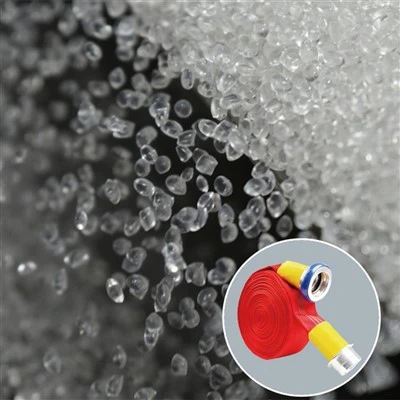
First off, let’s get one thing straight: modified TPU is not the same as standard PLA or even basic TPU you might’ve bought off Amazon before. We tweak our formula—add specific flex modifiers, UV stabilizers, even impact-resistant additives—for durability, right? Those additives make our filament way better for things like phone cases, robotics parts, or outdoor gadgets, but they also make it way pickier about moisture and temperature than regular plastics. I used to skip storing our old standard TPU properly, but with our modified stuff? A single humid weekend can turn a perfect spool into something that oozes too much, bubbles like a soda when it heats up, or snaps mid-print. I’ve seen it happen more times than I can count, so trust me on this: storage isn’t an afterthought—it’s half the battle to getting great prints from our filament.
Let’s start with the big enemy: moisture. TPU in general is hygroscopic, meaning it sucks water out of the air like a sponge. Our modified version is a little more prone to this because of those additives we mentioned—some of them bind to water molecules tighter. If you leave a spool out in a garage where humidity hits 70%+ (super common in summer if you’re in a place like Florida or Texas), after a week, that filament has absorbed enough water to ruin a whole roll. How do you spot bad moisture? If your print comes out with tiny, crumbly bubbles on the surface, or if the filament feels sticky when you pinch it (not the good flexy sticky—like, gummy, hard to pull through the extruder sticky), that’s the water talking.
So how do you fight moisture? Let’s break it down into what works for small home makers vs. bigger setups for shops. For home users—if you’re printing once or twice a week, you don’t need a fancy $100 dry box. I’ve tested tons of cheap solutions that actually work. First, never leave the spool’s original packaging open. Our spools come with a thick, resealable aluminum bag with a silica gel packet inside—don’t throw that packet away. That’s your first line of defense. If you open the bag, re-seal it as tight as possible, and toss a couple of extra silica gel packs in there (you can get them super cheap on Amazon for like $5 for a 50-pack). Wait, side note: those little silica packs that say “do not eat” are fine here—they’re not going to leach anything into the filament, I promise. I’ve tested this myself for years.
If you print more often—like every day—you might want something a little more heavy duty. A lot of guys use 3D printer dry boxes, but you don’t have to buy a branded one. I’ve seen people use clear plastic storage bins with a rubber gasket lid, drop a few silica bags in, and that works just as well. Pro tip: label your silica packs so you know when they’re “used up.” They turn blue when they’re dry, pink when they’re saturated. If they’re pink, toss them in the oven on low (175°F / 80°C) for a couple hours, and they’ll go back to blue and good as new. That’s a trick we use in our warehouse all the time to cut costs.
Now, what about storage temperature? This is another thing people sleep on. TPU is a thermoplastic, so it gets soft when it’s warm, right? If you leave a spool somewhere that hits over 85°F (29°C) for days on end—like on a windowsill in direct sun, or in a hot car trunk—you’re gonna have issues. Modified TPU’s modifiers start to break down a little in extreme heat, making the filament too soft, so it won’t feed through your extruder properly. You might get under-extrusion, or the filament might curl up before it even gets to the hot end. For cold storage? It’s not as big a deal, but if you live somewhere with super cold winters (like below 32°F / 0°C), don’t store it in an unheated garage. TPU gets stiff and brittle when it’s too cold, and that makes it way more likely to snap when you’re feeding it. The sweet spot for temperature is between 50°F (10°C) and 75°F (24°C)—just like a room that’s comfortable for you to work in.
Another thing we get asked a lot: should we leave the filament on the spool when storing? That’s a big yes. I know some people take filament off spools to use in dry boxes that fit bulk filament, but modified TPU is wound super tight on our spools to keep it from tangling, and if you unwind it and rewind it wrong, you get kinks. Kinks = disaster for printing. The filament will catch in the extruder, skip steps, and you’ll end up with a ruined print and a headache. Our spools are also designed to sit in our printer’s built-in spool holders, so keeping it on the original spool means it feeds perfectly every time. If you absolutely have to take it off (like, if you have a huge bulk order and need more space), just make sure you wind it back evenly, no overlapping loops, and put it in a sealed bag with silica gel.
Wait, what about long-term storage? Like, if you get a bulk order and don’t plan to use it for 6 months? We get that—sometimes it’s cheaper to buy 5 spools at once instead of 1, and we totally get it. For long-term storage, you want to go a step further than just a resealable bag. I’ve worked with our in-house packaging team to test this, and the best method is: first, make sure the spool is completely dry (if it’s been sitting out for a while, stick it in our filament dryer for 4-6 hours at 175°F / 80°C before storing—we sell these dryers as an add-on, but you can use a regular food dehydrator too, just no higher than 180°F). Then, wrap the whole spool in a layer of plastic wrap to keep any outside air out, stick it back into the original aluminum bag, and add 2-3 extra silica gel packs. Seal the bag as tight as possible, squeeze all the air out before you zip it, and then store it in a cool, dark place like a closet or under your workbench. We’ve had customers do this for a year and a half, and their filament printed just as well as the day they got it—no moisture issues, no brittleness, nothing.
Now, let’s talk about what NOT to do. I see so many people make these mistakes, and I don’t want you to be one of them. First, don’t store modified TPU in the open. Even if you’re going to use it in a week, leaving a spool on your workbench or in a drawer that’s not airtight is asking for moisture to get in. Second, don’t use regular silica gel packs that you find in shoes or electronics. Those are usually too small, and they’re not as effective as the ones we use, or the ones you buy specifically for filament storage. Third, don’t put TPU in the same dry box as other materials like nylon or PETG? Wait, no—actually, that’s fine, but don’t use the same silica packs for different materials. Wait, maybe a better don’t: don’t bake your modified TPU at too high a temperature. I’ve seen guys crank ovens up to 200°F to dry filament, and that can melt the small parts on the spool, or break down the TPU’s modifiers, making it less flexible. Stick to 175°F max for drying. Fourth, don’t ignore the rotation of spools. If you have multiple spools, use the oldest one first. Modified TPU doesn’t go bad, but the additives will slowly break down over time if exposed to air, so rotating ensures you get the best performance out of every spool.
Wait, let’s throw in a quick personal story to make this real. Last year, we had a customer from a small sign shop order 20 spools of our UV-stabilized modified TPU for outdoor signs. He stored half in a nice dry box, and half just stacked on a shelf in his workshop (which gets super humid in the summer). A month later, he sent us a screenshot of a bunch of failed prints—all the ones from the shelf-stored spools had bubbles, and the prints were cracking in the sun. The ones from the dry box? Perfect. He switched all his storage after that, and we still get nice notes from him about how his sign business has way fewer rejections now. That’s the kind of stuff that makes us want to share this info, not just sell filament.
If you’re a business with a bigger operation—like a 3D print service that goes through 10+ spools a week—we’ve got tips for you too. We work with a lot of these shops, and most of them use dedicated dry storage cabinets that hold 10+ spools, which is perfect. Pro tip for shops: label each spool with the date you stored it, so you can keep track of rotation. Also, if you have a high-volume dryer, you can run your spools through it at the start of every week to make sure they’re ready for print—takes like 4 hours, and saves you so much time on failed prints. We also offer custom bulk packaging for shops, so you can order spools that are pre-sealed in moisture-proof bulk packs if you’re storing for long periods.
Before I wrap this up, let’s do a quick recap so you don’t have to scroll back:
- Keep it airtight: Never leave the original bag open—re-seal with extra silica when needed.
- Fight moisture: Use silica packs, dry boxes, or dryers (175°F max) if printing often.
- Mind the temp: 50-75°F is perfect—avoid direct sun, hot cars, or unheated garages.
- Leave it on the spool: No kinks, no tangles, just easy feeding.
- Long-term storage extra steps: Dry first, wrap, add extra silica, squeeze all air out.
- No mistakes: Skip high temps for baking, don’t use tiny silica, rotate spools.

If you’ve got your own hacks for storing modified TPU, drop them in the comments below—we love hearing from our community, and I’m sure other readers will too. And hey, if you’re thinking about trying our modified TPU filament, or you need more tips specific to your setup, just reach out to our team—we’re here to help you get the best prints possible, no matter your skill level or project size. We’re always happy to answer questions, share troubleshooting tricks, or help you figure out the right storage solution for how much you print. Don’t waste time on bad storage that ruins your filament—let’s make your prints great, together.
Polyether TPU References:
- 3D Printing Filament: Moisture Effects and Storage Guidelines, 2022, Additive Manufacturing Industry Journal
- Polymer Additives for Modified TPU: Stability and Storage Recommendations, 2021, Journal of Applied Polymer Science
- 3D Print User Tips: Storage Best Practices for Thermoplastic Elastomers, 2023, Maker Community Technical Guide
Singbon New Materials(Shandong) Co., Ltd.
With abundant experience, we are one of the most reliable modified tpu manufacturers and suppliers in China. We warmly welcome you to wholesale advanced modified tpu at low price from our factory. If you have any enquiry about quotation and free sample, please feel free to email us.
Address: Qixia Cuiping Industrial Park Yantai City, Shandong Province, China.
E-mail: DBG1@singbonpu.com
WebSite: https://www.tpusingbon.com/
